Daijiworld Media Network - Mumbai
Mumbai, Apr 25: A metro corridor originally conceived as a limited Thane-Bhiwandi link has now been expanded into a wider network connecting Thane, Bhiwandi, Kalyan and Ulhasnagar, in a move expected to transform commuting across the Mumbai Metropolitan Region.
The revised Metro Line 5, along with its extension Line 5A, was approved at a state infrastructure development committee meeting chaired by Chief Minister Devendra Fadnavis, with the project cost pegged at Rs 18,130.55 crore.
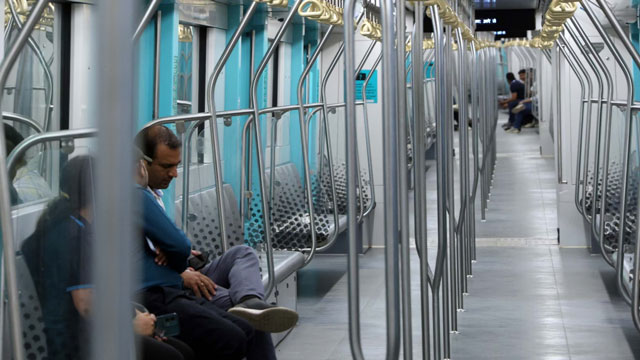
The expanded corridor now stretches 34.2 km with 19 stations, significantly larger than the original 24.9-km, 17-station plan approved in 2017.
Officials said one of the key changes is in the Bhiwandi-Kalyan stretch, where a section between Dhamankar Naka and Temghar has been shifted underground from the earlier elevated design to avoid demolition of the Bhiwandi Bypass Flyover and reduce traffic disruption.
Another major engineering modification includes a double-decker structure between Ranjanoli Junction and Durgadi, where a flyover and metro line will share the same corridor to optimise space.
At Kalyan, the proposed APMC station has been dropped and integrated into another upcoming corridor to improve network efficiency.
A major addition under the revised plan is Metro Line 5A, extending from Durgadi toward Kalyan Junction and Ulhasnagar, providing direct connectivity with Central Railway and bringing Ulhasnagar onto the metro map for the first time.
Officials said the Ulhasnagar spur could also pave the way for a future extension to Ambernath and Badlapur.
The corridor is expected to provide major relief to commuters in Bhiwandi, Kalyan and nearby areas that currently rely heavily on overcrowded suburban trains and congested road networks.
The project will also integrate with Metro Line 4 at Thane, connect with Central Railway, and link to the upcoming Metro Line 12 at Kalyan, allowing smoother interchanges across the network.
The Thane-Bhiwandi stretch is nearing completion and is expected to open by the end of 2026, while the full corridor is targeted for completion by 2031.
Infrastructure analysts said the project could significantly improve mobility in areas currently lacking mass rapid transit, though concerns remain over pedestrian access and integration at Kalyan station.