Daijiworld Media Network – Johannesburg
Johannesburg, Apr 9: Researchers at the Wits Advanced Drug Delivery Platform (WADDP) are developing an innovative inhalable nanosystem aimed at delivering tuberculosis (TB) drugs directly to infected areas in the lungs, offering a potential breakthrough in treatment.
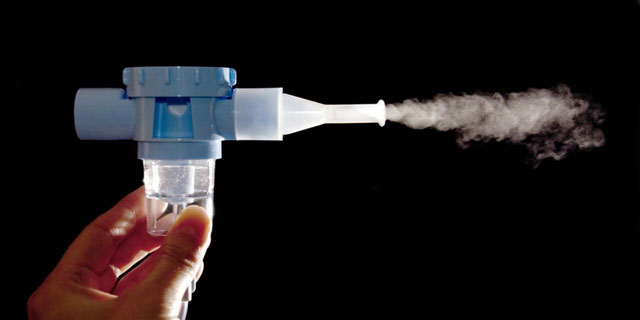
The technology uses a biocompatible nanocarrier to package four key TB medicines — rifampicin, isoniazid, ethambutol and pyrazinamide — into a single formulation. By delivering the drugs through inhalation, the system is designed to bypass the liver and bloodstream, ensuring higher drug concentration at the infection site while reducing loss of medication.
“TB hides in lung pockets where oral drugs can’t reach. Our system is designed to go exactly where it’s needed,” said Lindokuhle Ngema, part of the research team.
Tuberculosis, caused by Tuberculosis, continues to pose a major global health challenge, with around 10 million new cases and 1.8 million deaths reported annually. Despite widespread use of the BCG vaccine in infancy, its effectiveness often declines over time, leaving adults vulnerable.
The World Health Organization has set ambitious targets under its End TB Strategy, aiming to reduce new cases by 80 per cent and deaths by 90 per cent by 2030 — goals that experts say require innovative treatment approaches.
“Precision nanomedicine allows us to treat smarter and faster,” said Yahya Choonara, highlighting the need to move beyond traditional drug delivery systems.
Current TB treatment involves a prolonged six-month course of oral medication, often leading to poor patient adherence due to side effects such as nausea, liver damage and nerve-related issues. Incomplete treatment has contributed to the rise of drug-resistant strains of TB.
Researchers believe inhalation therapy could significantly improve outcomes by delivering drugs directly to affected lung regions — from bronchi to alveoli — potentially shortening treatment duration and enhancing effectiveness.
The nanosystem is engineered to be non-toxic and biocompatible, with researchers collaborating with the Nuclear Medicine Research Institute to track how the particles move within the lungs using advanced imaging techniques.
The project, conceptualised at WADDP with support from RWTH Aachen University Hospital, is now moving towards real-world clinical application.