Daijiworld Media Network - Washington
Washington, Apr 7: US President Donald Trump has repeatedly extended deadlines for Iran to reopen the Strait of Hormuz, even as his warnings of military action grow sharper, creating uncertainty over whether a deal or escalation lies ahead.
Trump initially issued a 48-hour ultimatum on March 22, warning Iran that failure to reopen the strategic waterway would result in strikes on key energy infrastructure. However, the deadline has since been extended multiple times, stretching to nearly 408 hours.
In his first warning, Trump had said the United States would “hit and obliterate” Iranian power plants if the strait was not opened. A day later, he paused potential strikes for five days, citing “productive conversations” with Tehran.
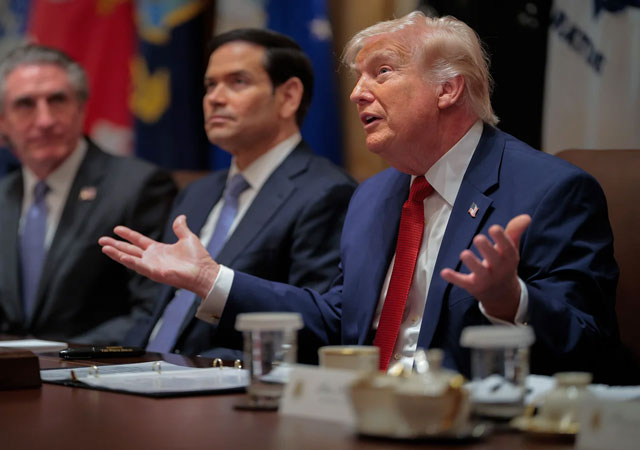
On March 26, he further extended the deadline to April 6, saying negotiations were progressing well, while cautioning Iran to “get serious.” The deadline was again pushed by 10 days before being extended by an additional 24 hours on April 6, with Trump announcing a new cut-off at 8 pm Eastern Time on Tuesday.
In a series of posts, Trump hinted at possible military action, stating, “Tuesday will be Power Plant Day, and Bridge Day, all wrapped up in one, in Iran.” He later issued a stark warning that “a whole civilisation will die tonight” if a deal is not reached.
Despite the strong rhetoric, US officials indicated that strikes could still be delayed if diplomatic progress is made. “If the President sees a deal is coming together, he’ll probably hold off,” a senior administration official was quoted as saying.
Trump, however, has maintained that the latest deadline is final, asserting that the US is engaged in “deep negotiations” with Iran and that a deal remains possible.
Reports suggest that talks are being conducted through multiple channels, including direct communication via messages and mediation efforts involving countries such as Pakistan, Turkey and Egypt.
Iran has reportedly rejected initial proposals and submitted its own 10-point plan, even as tensions remain high over the future of the Strait of Hormuz, a crucial global oil transit route.
With the latest deadline set to expire, global attention remains focused on whether diplomacy will prevail or the situation will escalate into military confrontation.