Daijiworld Media Network - Cuddalore
Cuddalore, Mar 19: In a remarkable example of community-driven ecological restoration, a garbage-choked stretch of the Buckingham Canal in Cuddalore has been transformed into a vibrant mangrove ecosystem, breathing new life into the region’s fragile coastal environment.
The 3-km canal stretch under the Pichavaram mangroves range, once clogged with plastic waste and debris, now supports nearly 3,000 mangrove saplings along its banks. The initiative has not only restored the canal’s water flow but also significantly enhanced local biodiversity.
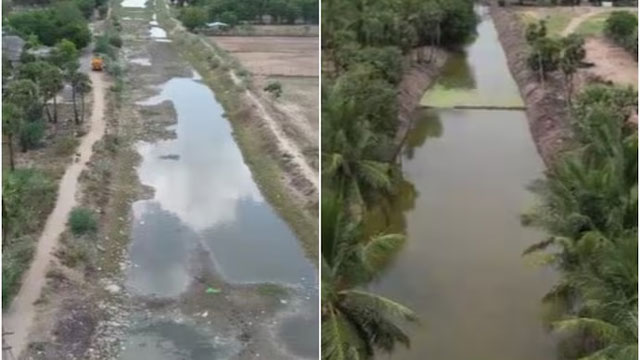
Carried out at a cost of Rs 69 lakh, the project witnessed active participation from around 600 local residents, who collectively removed nearly 750 kg of plastic waste. The waste was handed over to the Killai Town Panchayat for scientific disposal, paving the way for large-scale plantation.
Officials said the restoration began with desilting and excavation to revive the canal’s natural water-carrying capacity and improve tidal exchange. The subsequent mangrove plantation has helped stabilise the shoreline, restore hydrological balance, and strengthen the overall ecosystem of the Pichavaram region.
The rejuvenation has also improved water circulation into the backwaters, benefiting nearly 50 Irula tribal fishing families who depend on the ecosystem for their livelihoods.
According to an official statement, the project was implemented under the leadership of the Cuddalore district administration in coordination with the Forest Department and other agencies. The on-ground efforts were led by Forest Range Officer Iqbal, with support from District Collector Sibi Adhithya and senior officials.
Tamil Nadu Environment Secretary Supriya Sahu hailed the initiative as part of the state’s climate-resilient village programme. She noted that the once plastic-choked canal has now been rejuvenated into a thriving ecosystem, strengthening coastal resilience through collective action.
The success of the project is being widely regarded as a model for restoring degraded water bodies through coordinated government intervention and strong community participation.