Daijiworld Media Network - Mainz
Mainz, Mar 6: Optical Coherence Tomography (OCT) remains an important diagnostic tool in ophthalmology for identifying optic nerve diseases and monitoring disease progression, but experts caution that it should not be relied upon as a standalone method, particularly in neuro-ophthalmic conditions.
Speaking to Ophthalmology Times Europe during the 2nd International Glaucoma Symposium held in Mainz, Germany on January 31, Prof. Dr. med. Wolf Lagrèze highlighted both the potential and limitations of Optical Coherence Tomography in diagnosing neurological disorders affecting the optic nerve.
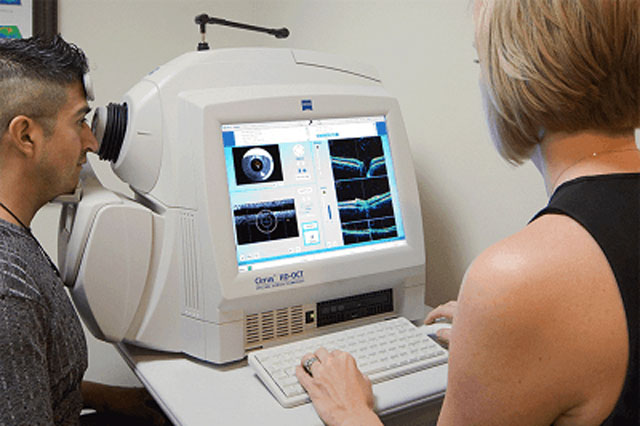
Lagrèze said OCT should be viewed as one component within a broader diagnostic framework that includes fundus examination, visual field testing, pupillary assessment, patient history and other clinical evaluations. While OCT can assist in differentiating optic nerve conditions and tracking disease progression, especially in glaucoma, experienced clinicians can often identify glaucomatous optic nerve damage through traditional examination methods.
He explained that OCT becomes particularly helpful in certain cases where clinicians need to distinguish glaucoma from other conditions such as optic disc drusen. With enhanced depth imaging, the technology allows doctors to examine deeper structures within the optic nerve head and measure swelling that may indicate underlying pathology.
However, Lagrèze emphasised that OCT does not yet provide specific biomarkers for major neurological disorders such as Alzheimer's disease or Multiple sclerosis. Although researchers are exploring potential diagnostic patterns, he said it is currently impossible to determine such diseases based solely on OCT findings.
The technology has proven particularly useful in detecting minor papilledema, a condition characterised by swelling of the optic disc caused by increased intracranial pressure. Clinicians often analyse patterns such as the relationship between ganglion cell loss and axonal swelling or sector-specific nerve damage to better understand optic nerve involvement.
Despite its advantages, Lagrèze warned that OCT images provide primarily black-and-white structural information, unlike traditional fundus examination that offers colour detail. Advanced techniques such as OCT angiography (OCT-A) have improved the ability to visualise microvasculature, but interpretation still requires careful clinical judgment.
He also highlighted the risks of misinterpretation, particularly when non-ophthalmologists rely solely on OCT parameters. Following revisions to the McDonald Criteria used to diagnose multiple sclerosis, optic nerve changes are now considered an additional indicator of disease. However, he cautioned that relying only on measurements such as inter-eye differences in nerve fibre layers could lead to false diagnoses if patient history, refractive errors or other eye conditions are not considered.
Lagrèze stressed the importance of collaboration between neurologists and ophthalmologists to ensure accurate interpretation of OCT findings and avoid diagnostic errors.
Looking ahead, he said the integration of OCT with Artificial Intelligence could transform early disease detection. AI systems are capable of analysing large datasets and identifying subtle patterns that may not be visible to clinicians, potentially improving early diagnosis of neurological and ocular diseases.
However, he cautioned that while AI-assisted imaging may increase sensitivity in detecting disease, maintaining diagnostic specificity is crucial to prevent false diagnoses that could have serious consequences for patients.
Lagrèze concluded that OCT, which has been in clinical use for nearly three decades, continues to evolve and may play an increasingly important role in both ophthalmology and neurology, provided it is used carefully and in conjunction with comprehensive clinical evaluation.