Daijiworld Media Network – Panaji
Panaji, Feb 17: Fresh uncertainty has surfaced over a possible pre-poll understanding between the Congress and the Goa Forward Party for the 2027 Assembly elections after remarks by senior AICC leader Manickrao Thakre.
For weeks, political circles in Goa had indicated that the Congress and Goa Forward were moving towards an alliance, with signals suggesting that discussions were more than exploratory. However, Thakre’s assertion that alliances cannot be announced without following due process within the party has prompted renewed debate.
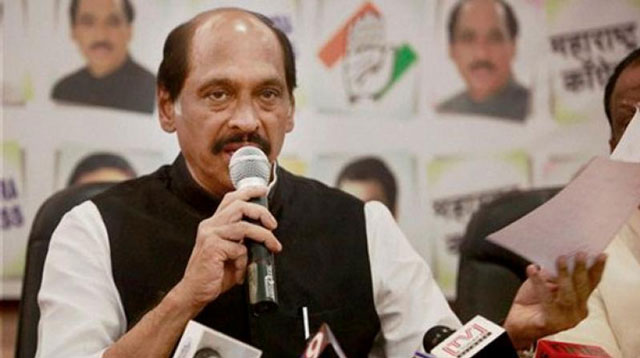
Formally, his position reflects established procedure. In a national party like the Congress, alliances require consultations at the state level and approval from the central leadership. Seat-sharing arrangements, constituency dynamics and long-term strategy demand deliberation.
The concern, observers note, lies in the messaging. If talks were preliminary, questions arise as to why public perception was allowed to suggest that an agreement was imminent. If discussions were advanced, the sudden emphasis on procedure appears to signal recalibration.
The Congress in Goa is still rebuilding after years marked by defections and electoral setbacks. Its credibility has taken a hit, and political analysts say that restoring confidence requires clarity and discipline in communication. A tie-up with Goa Forward could be viewed as a pragmatic step to consolidate opposition votes in a fragmented political landscape.
At the same time, alliances carry inherent risks. Grassroots workers often share rivalries with leaders from other parties, and partnerships demand ideological coherence beyond electoral arithmetic. Within the Congress, there may be differing views on whether aligning with a regional outfit strengthens its prospects or dilutes its independent identity.
For Goa Forward, mixed signals are significant. Public discourse around an alliance shapes strategy at the constituency level. When a senior AICC functionary underscores that nothing can be formalised without central approval, it may be interpreted as hesitation.
Voters, meanwhile, remain uncertain. Goa’s electorate has witnessed multiple realignments and post-poll manoeuvres in recent years, contributing to scepticism about opaque negotiations. If a pre-poll understanding for 2027 materialises, clarity on governance priorities — including environment, land protection and economic development — will be crucial.
With the Assembly elections still some distance away, there is time for dialogue and decision-making. However, political observers say that consistent and transparent communication will be key. Whether the Congress chooses to ally with Goa Forward or contest independently, a clear articulation of strategy may determine public trust in the run-up to 2027.