Daijiworld Media Network - Tehran
Tehran, Jan 6: The death toll in violence linked to ongoing protests across Iran has climbed to at least 35, activists said on Tuesday, as demonstrations continued unabated despite stern warnings from the country’s leadership.
According to the US-based Human Rights Activists News Agency (HRANA), at least 29 protesters, four children and two members of Iran’s security forces have been killed during the unrest, which has been ongoing for more than a week. The group also said over 1,200 people have been detained so far.
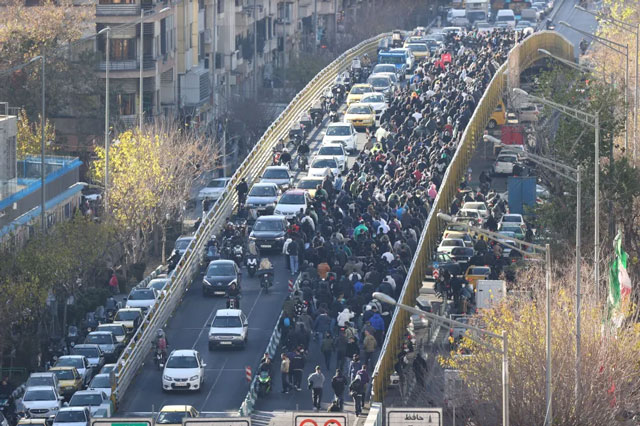
HRANA reported that protests have spread to more than 250 locations across 27 of Iran’s 31 provinces. The organisation relies on a network of activists inside Iran and has been considered a reliable source during previous episodes of unrest.
Meanwhile, Iran’s semiofficial Fars news agency, which is believed to be close to the Islamic Revolutionary Guard Corps (IRGC), reported late Monday that around 250 police officers and 45 members of the Basij volunteer force were injured during clashes with protesters.
The rising death toll has raised the prospect of international intervention. US President Donald Trump warned Iran on Friday that if Tehran “violently kills peaceful protesters,” the United States “will come to their rescue.” His remarks triggered sharp reactions from Iranian officials, who threatened retaliation against American troops in the Middle East.
Trump’s warning gained added significance following the US military’s recent capture of Venezuelan President Nicolás Maduro, a key ally of Tehran, over the weekend.
The current unrest marks Iran’s largest wave of protests since 2022, when the death of 22-year-old Mahsa Amini in police custody sparked nationwide demonstrations. However, activists say the present protests have not yet reached the same intensity or scale as those triggered by Amini’s death, which followed her detention for allegedly violating hijab rules.
Iran has witnessed repeated nationwide protests in recent years amid worsening economic conditions. Following tighter sanctions and the aftermath of a 12-day war with Israel, Iran’s currency collapsed in December, with the rial plunging to around 1.4 million to the US dollar, fuelling public anger and sparking the latest demonstrations.
Assessing the full scale of the unrest has been challenging, as Iranian state media has provided limited coverage. Social media videos offer only brief glimpses of street protests and gunfire, while journalists face strict restrictions on movement and reporting, along with the risk of arrest.
Despite Supreme Leader Ayatollah Ali Khamenei’s warning on Saturday that “rioters must be put in their place,” there are no signs that the protests are subsiding, activists said.