Daijiworld Media Network - Jerusalem
Jerusalem, Dec 24: Concerns over the erosion of women’s rights in Israel have intensified as Prime Minister Benjamin Netanyahu’s right-wing government, backed by ultra-Orthodox parties, pushes the country towards a more conservative and religious framework. Activists warn that policies once dismissed as exaggerated fears are now becoming reality.
Three years after women protesters dressed as characters from The Handmaid’s Tale warned against the government’s judicial overhaul, critics say their fears have proven prescient. The weakening of the Supreme Court — historically a key pillar in advancing gender equality — has coincided with legislative efforts that threaten women’s civil rights.
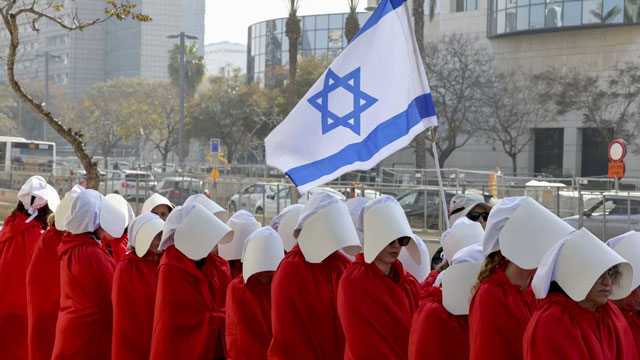
Religious parties supporting Netanyahu have introduced bills aimed at expanding religious authority over public life. These include proposals allowing gender segregation at cultural events and educational institutions. With the ability to destabilise the ruling coalition, these parties have exerted significant influence over policy decisions.
The impact is reflected in global rankings. According to the 2025–26 Women, Peace and Security Index by Georgetown University, Israel now ranks 84th out of 181 countries, a steep fall from its 27th position before the current government assumed power. The ranking places Israel behind countries such as Albania, Russia and Saudi Arabia.
Women’s representation in governance has also declined. Of the 33 ministers in the current cabinet, only six are women, with none holding top leadership portfolios. No woman has been appointed as a permanent director-general across more than 30 ministries, and no major political party is currently led by a woman. Two parties in Netanyahu’s coalition have no women representatives at all.
“The deterioration in Israel’s gender equality ranking is unprecedented,” said Daphna Hacker of Tel Aviv University’s Faculty of Law and Gender Studies. “Israel was once seen as a pioneer in women’s rights. Today, women are virtually absent from key decision-making spaces.”
A controversial bill under debate in the Knesset is drawing particular concern. If passed, it would significantly expand the powers of state-run religious courts — staffed exclusively by men — to adjudicate civil disputes, including financial and business matters, and potentially child custody cases. These courts already oversee marriage and divorce.
Women’s rights groups have strongly opposed the move. Bonot Alternativa, the protest group behind the earlier ‘Women in Red’ demonstrations, warned that the legislation would further entrench discrimination. “This bill places women’s fate in the hands of a system that inherently marginalises them,” the group said during a recent protest outside a rabbinical court in Tel Aviv.
Activists and legal experts say the developments mark a sharp reversal from Israel’s earlier achievements, including the Equal Rights for Women Law of 1951 and the election of Golda Meir as one of the world’s first female heads of government. Many fear that without intervention, decades of progress could continue to unravel.