Daijiworld Media Network - Riyadh
Riyadh, Dec 18: In a significant boost to bilateral ties, India and Saudi Arabia have signed a mutual agreement exempting holders of diplomatic, special and official passports from short-stay visa requirements, marking a new milestone in diplomatic relations between New Delhi and Riyadh.
The agreement was signed at the Saudi Ministry of Foreign Affairs headquarters in Riyadh. Saudi Deputy Minister of Foreign Affairs for Protocol Affairs Abdulmajeed Al-Smari signed the pact on behalf of Saudi Arabia, while Indian Ambassador to the Kingdom Dr Suhel Ajaz Khan represented India.
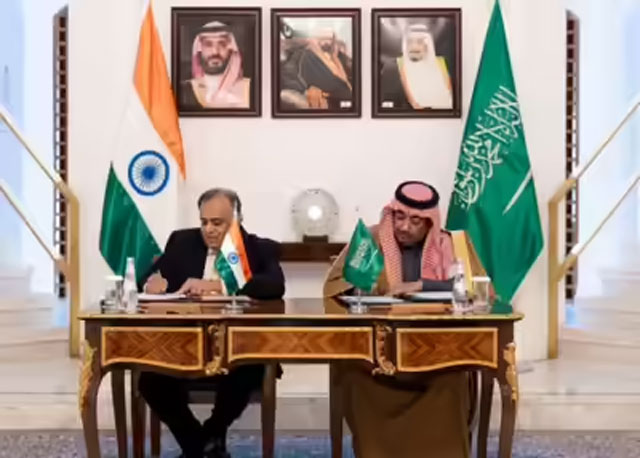
Under the agreement, diplomatic, special and official passport holders from both countries can now travel for short stays without the need to obtain a visa in advance. The move is aimed at easing official travel, reducing bureaucratic hurdles and facilitating smoother and more frequent diplomatic engagements.
The visa exemption, however, does not apply to ordinary passport holders, tourists or business travellers, who will continue to require appropriate visas. The agreement is specifically intended to benefit government officials, diplomats and special envoys engaged in official duties.
Officials said the pact reflects the growing trust, cooperation and strategic partnership between the two nations. India and Saudi Arabia have been strengthening ties across multiple sectors, including trade, defence, energy, tourism, culture and global cooperation. The expansion of the Saudi-India Strategic Partnership Council in recent years has further reinforced this relationship.
By simplifying official travel, the agreement is expected to encourage more high-level interactions, expedite the implementation of bilateral initiatives and strengthen coordination on key regional and global issues.
Analysts note that while the agreement is limited in scope, such measures often pave the way for broader visa facilitation in the future. With Saudi Arabia being one of India’s key partners in the Gulf and a major destination for the Indian diaspora, the move is seen as a positive step towards deeper engagement and enhanced people-to-people and institutional ties.