Daijiworld Media Network – New Delhi
New Delhi, Dec 13: The Delhi government has notified the Delhi School Education (Transparency in Fixation and Regulation of Fee) Act, 2025, bringing into force a new framework to regulate fees charged by private schools across the national capital.
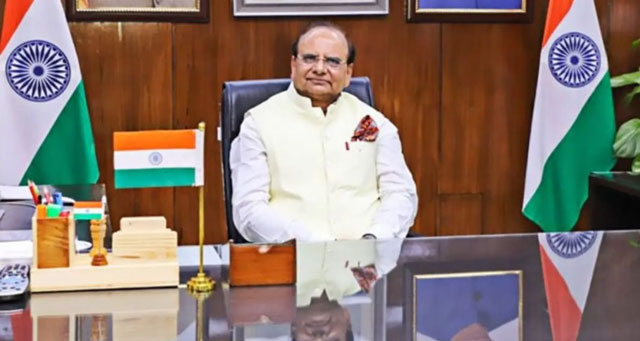
The legislation was notified on Wednesday, nearly four months after it was passed by the Delhi Assembly, following approval from Lieutenant Governor V K Saxena. The Act lays down detailed provisions on permissible fee heads, accounting practices and restrictions on additional charges, while strictly prohibiting capitation fees or any collection beyond what is approved under the law.
As per the notification, private unaided recognised schools will be allowed to levy only itemised fees under specific heads such as registration, admission charges, tuition fees, annual charges and development fees. Registration fees have been capped at Rs 25, admission charges at Rs 200, and caution money at Rs 500, which will be refundable with interest. Development fees cannot exceed 10 per cent of the annual tuition fee.
The Act mandates that all user-based service charges must be collected strictly on a no-profit, no-loss basis and cannot be imposed on students who do not avail of the service. Any fee not expressly permitted under the law will be treated as an “unjustified fee demand”, while collection of capitation fees, whether direct or disguised, has been completely banned.
Schools have been directed to maintain transparent accounting standards, keep fixed asset registers and make proper provisions for employee benefits. The transfer of student-collected funds to any other legal entity, including a school’s managing society or trust, has been prohibited. Any surplus generated must be refunded to parents or adjusted against future fees.
The legislation, earlier introduced as the Delhi School Education (Transparency in Fixation and Regulation of Fees) Bill, 2025, was described by the government as a historic step aimed at ending arbitrary fee hikes and reducing the financial burden on parents.
Chief Minister Rekha Gupta and Education Minister Ashish Sood had tabled the Bill in September amid widespread complaints from parents over steep fee hikes by several private schools at the start of the academic year.
The Act applies uniformly to all private unaided schools, including minority institutions and those not built on government-allotted land. It also bars schools from taking punitive action against students over unpaid or delayed fees, including withholding results, striking off names or denying entry to classes.
A key provision of the law is the mandatory constitution of a School-Level Fee Regulation Committee by July 15 every year. The committee will include five parents selected through a draw of lots from the parent-teacher association, with compulsory representation of women and members from Scheduled Castes, Scheduled Tribes and socially and educationally backward classes. A representative of the Directorate of Education will also be part of the panel, while the chairperson will be from the school management.
Schools must submit their proposed fee structure to the committee by July 31. The committee may approve or reduce the proposed fees but cannot increase them. Once approved, the fee structure will remain fixed for the next three academic years. The final fee details must be displayed on the school notice board in Hindi, English and the medium of instruction, and uploaded on the school’s website wherever applicable.