Daijiworld Media Network - Bengaluru
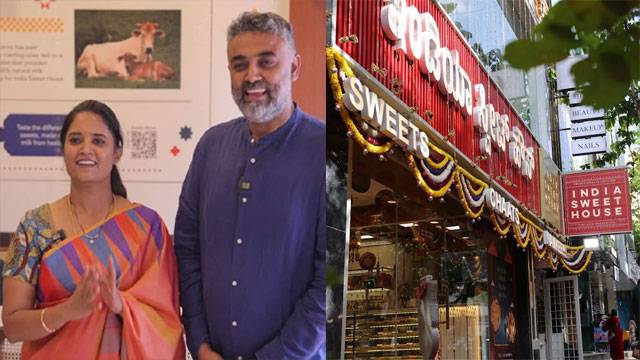
Bengaluru, Nov 28: A business setback can sometimes become the foundation of an extraordinary success story. The journey of Bengaluru-based entrepreneurs Shwetha Rajashekar and Vishwanath Murthy, who transformed a struggling dairy venture into a sweets and savouries chain with more than 50 outlets and annual revenue of over Rs 83 crore, is a testament to innovation, resilience and the courage to embrace change.
The couple's entrepreneurial journey began around 2015-16 when they ventured into organic farming. They established a 20-acre farm with around 100 cows and started supplying milk, paneer and ghee under the brand Karma Farms. Their objective was to build a sustainable business around farm-fresh dairy products.
However, the Covid-19 pandemic brought unexpected challenges. Demand for fresh milk became difficult to manage, while restrictions and logistical difficulties affected their direct-to-consumer business. Collecting and returning glass milk bottles also became a major hurdle. With surplus milk and a struggling business model, the couple faced a crucial turning point.
Instead of giving up, they decided to find another way to utilise their existing resources. They began experimenting with traditional Indian sweets, using the milk available at their farm. What started as an effort to manage surplus milk gradually developed into a promising business opportunity.
This idea gave birth to India Sweet House (ISH) in 2020. The founders initially adopted an online-first business model, selling their products through platforms such as BigBasket, Metro Cash and Carry and SPAR India. This helped them understand customer preferences and establish their brand before entering physical retail.
In July 2021, they opened their first physical outlet at Malleswaram in Bengaluru. The initial investment and subsequent expansion required careful planning, as the sweets market was already dominated by established brands and traditional businesses.
The founders identified an opportunity to offer customers quality traditional sweets in a modern retail environment. Rather than limiting their outlets to takeaway counters, they introduced a welcoming store experience where customers could enjoy sweets, savouries and chaats.
The product range gradually expanded to include murukku, chips, cookies, snacks and other traditional delicacies. The company also strengthened its presence in the food segment through its Chaatimes business.
Consistency in quality, customer experience and supply-chain management became central to its expansion strategy. The founding team also included Rajesh Mehta, who brought several decades of experience in the food-service industry.
The results have been remarkable. India Sweet House has expanded to more than 50 outlets, primarily across Karnataka. According to financial data from Tracxn cited by Moneycontrol, the company recorded revenue of Rs 83.10 crore in FY25, with an EBITDA of Rs 6.15 crore and a net profit of Rs 1.83 crore. It also secured $1 million in funding from Viney Equity Market in October 2024.
The journey of Shwetha and Vishwanath offers an important lesson to aspiring entrepreneurs. Their success did not emerge from an idea that worked perfectly from the beginning. It came from recognising a problem, adapting to changing circumstances and making the best use of available resources.
What began as a dairy venture struggling during a global pandemic has grown into a recognised sweets retail chain. Their story demonstrates that setbacks need not mark the end of a dream. With determination, creativity and the willingness to change direction, even an unexpected challenge can become the beginning of something extraordinary.