Daijiworld Media Network - Tehran
Tehran, Nov 3: Iran and the United States are reviewing fresh proposals put forward by mediators to bridge their differences and prevent another round of full-scale war, amid heightened tensions across the Middle East.
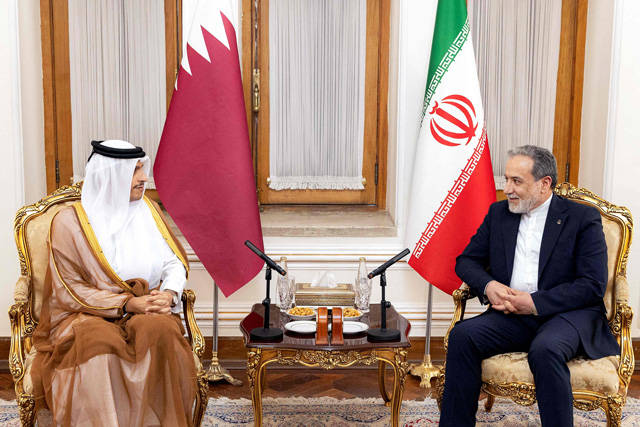
A diplomat familiar with the discussions said Qatari mediators travelled to Tehran on Monday for talks with Iranian officials and returned later in the day. The discussions in the Iranian capital were described as positive, although major differences between the two sides remain unresolved.
Iranian Parliament Speaker Mohammad Bagher Ghalibaf, who is among Tehran's senior negotiators with Washington, said Iran had delivered a strong and rational response to the American side. According to Iran's Fars news agency, he said the responsibility was now on Washington to prevent a war, while warning that Iran was prepared to retaliate forcefully against any American or Israeli attack.
The latest diplomatic initiative comes after weeks of escalating tensions, with Iran intensifying attacks on vessels around the strategically important Strait of Hormuz and US President Donald Trump signalling the possibility of renewed military action against the Islamic Republic after Tuesday's midterm elections.
Israeli Prime Minister Benjamin Netanyahu has repeatedly highlighted the need for regime change in Iran. A report by Axios on Sunday said Netanyahu was pressing Trump to launch fresh strikes against Iran immediately after the US elections.
Meanwhile, several American media outlets reported that the United States had carried out overnight strikes against targets on Iran's Qeshm island, located inside the Strait of Hormuz. The Wall Street Journal, citing unidentified US officials, reported that the operations were limited military actions intended to help ships navigate the waterway safely. At least one strike was reportedly carried out in response to an incident in which Iran's Islamic Revolutionary Guard Corps fired at an American aircraft. Washington has not officially announced the reported attacks.
Oil prices, which had surged over the previous month amid fears of further escalation, fell by around 10 per cent on Monday after indications that the White House was prepared to give diplomacy more time. Brent crude rose 1.7 per cent to $106.50 a barrel in early trading on Tuesday, remaining significantly below last week's closing level of nearly $118.
Speaking to reporters in Washington during his final campaign message ahead of the midterm elections, Trump indicated that an agreement with Iran was possible. He said the two sides wanted a deal and suggested that falling oil prices reflected growing expectations of a diplomatic breakthrough. Asked whether he would resume military strikes after the elections, Trump reportedly mouthed the word "No".
Iranian President Masoud Pezeshkian also indicated that Tehran was pursuing a diplomatic solution. He said Supreme Leader Mojtaba Khamenei had granted the government additional authority to pursue negotiations.
"We are striving to resolve the issue through dialogue and, in this regard, the supreme leader has also granted certain powers to the government," the state-run Islamic Republic News Agency quoted Pezeshkian as saying.
However, the Iranian president did not specify the extent of the additional authority or whether it represented a broader change in the country's negotiating position.
Trump has repeatedly said he wants to resolve the conflict either through an agreement or by ordering renewed large-scale military operations. The war began in late February when the United States and Israel launched strikes against Iranian targets and senior officials, including former Supreme Leader Ali Khamenei.
The conflict triggered retaliatory attacks by Iran against American allies in the Gulf, including the United Arab Emirates, Saudi Arabia and Qatar. Iranian attacks on shipping also disrupted traffic through the Strait of Hormuz, a critical international route for oil and liquefied natural gas supplies.
The disruption contributed to a sharp increase in global energy prices. In the United States, diesel prices reached record levels, while average petrol prices crossed $4 a gallon, adding to public concerns over the economic consequences of the conflict.
Following a ceasefire in early April, the two sides continued to engage in intermittent military confrontations, although at a lower intensity than during the initial phase of the war. A memorandum of understanding reached in June was intended to pave the way for a formal peace agreement, but the arrangement collapsed within approximately two weeks.
Trump subsequently claimed on social media that oil prices were falling sharply because markets expected that a war with Iran would not resume.
US Vice-President JD Vance also expressed optimism about the prospects of a negotiated settlement, saying Washington had held several positive conversations with Iranian representatives. However, he cautioned that Tehran remained unpredictable.
Despite the diplomatic activity, significant differences continue to obstruct an agreement. Iran is demanding the lifting of the US naval blockade on its ports, sanctions relief and the release of frozen Iranian assets. Washington, meanwhile, is seeking concessions from Tehran concerning its nuclear programme.
Iranian Foreign Minister Abbas Araghchi said consultations had intensified and that Tehran had already presented its conditions and proposal. He warned that any American attempt to use negotiations as a cover for military operations would invite a stronger Iranian response.
According to Ali Vaez, director of the Iran Project at the International Crisis Group, Tehran is seeking an agreement that would prevent future attacks by the United States and Israel rather than merely secure a temporary halt to hostilities.
He said Iran wanted a durable peace that would restore its deterrence and prevent another round of military confrontation.
At the same time, Supreme Leader Mojtaba Khamenei has reportedly directed senior military commanders to prepare for a possible renewed confrontation with the United States and Israel and expand Iran's options for retaliation.
These developments have heightened concerns among Gulf Arab nations that a renewed conflict could be even more destructive and spread across the region, with serious consequences for regional security, energy supplies and maritime trade.