Daijiworld Media Network - Jerusalem
Jerusalem, Oct 28: Parties opposed to Israeli Prime Minister Benjamin Netanyahu secured 67 seats in the 120-member parliament after 85.6 per cent of votes were counted in Tuesday’s election, according to updated official results.
The Central Elections Committee said the results were based on the counting of most votes cast at regular polling stations, Xinhua News Agency reported. Around half a million votes cast in double envelopes at polling stations in military bases, hospitals and other institutions are yet to be counted, with the process expected to be completed by Friday.
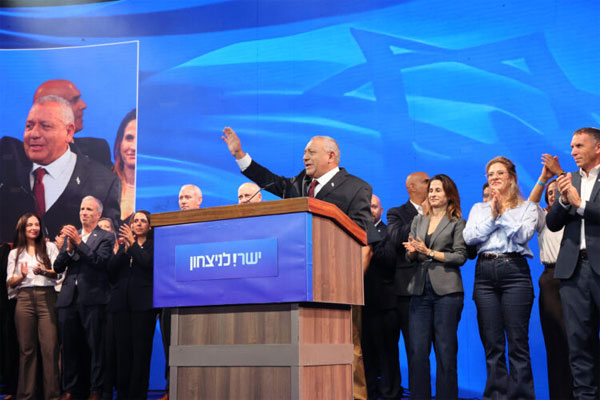
According to the latest count, Netanyahu’s right-wing bloc won 53 seats, while the opposition secured 67 seats, including 48 for the bloc led by former military chief Gadi Eisenkot and 19 for Arab parties.
Netanyahu’s Likud party remained the largest single party with 26 seats, followed by Eisenkot’s Yashar party with 21 seats. The Joint List, an alliance of Arab-majority parties, and the centre-right Together party secured 12 seats each, while the Arab-majority Ra’am party won seven seats.
Arab parties have called for a coalition with Eisenkot’s bloc based on an unprecedented Jewish-Arab partnership. However, Eisenkot had repeatedly ruled out forming a government with Arab parties or relying on their support ahead of the elections. Netanyahu has also rejected their participation in the government.
Meanwhile, Israeli President Isaac Herzog said on Wednesday that every effort must be made to avoid another election, after preliminary results indicated that neither of the two main blocs had secured a majority in parliament.
Israel now faces political uncertainty, with analysts pointing to several possible scenarios, including prolonged coalition negotiations, the formation of a unity government or another round of elections. Arab parties could play a crucial role in resolving the political deadlock.
The country's proportional electoral system adds to the uncertainty. Parties must secure at least 3.25 per cent of the national vote to enter parliament, meaning even minor shifts in voting margins could significantly affect the distribution of seats.