Daijiworld Media Network - Dubai
Dubai, Sep 24: The Gulf's aviation industry is facing significant disruption from the Iran war, with rising oil prices, airspace closures and pressure on regional tourism affecting airlines. However, Airbus expects the Middle East's aviation sector to maintain strong long-term growth.
According to the International Air Transport Association (IATA), Middle Eastern airlines are forecast to move from a net profit of USD 7.2 billion in 2025 to a net loss of USD 4.3 billion in 2026.
Despite the near-term challenges, Airbus said it had not recorded a single cancellation of its aircraft orders since the conflict began, indicating continued confidence in the region's long-term aviation prospects.
“People want to fly because flying brings value. What we find is that this region has proven to be resilient and that demand is growing,” Antonio Teixeira Da Costa, Airbus Vice President of Market Analysis and Forecast, told Arab News at the launch of the company's global market outlook report in Dubai.
Airbus forecasts that the Middle East will require around 3,830 new passenger aircraft over the next 20 years, while passenger traffic within the region is expected to more than double by 2045.
The European aircraft manufacturer expects Middle Eastern passenger traffic to grow at an annual rate of 4.7%, compared with its global forecast of 3.9%.
Da Costa said Airbus expected the current conflict to eventually be resolved, after which aviation growth in the region could accelerate further.
Signs of recovery are already emerging, with scheduled airline capacity in the Middle East in September standing just 3.7% below the level recorded a year earlier, according to OAG.
Airbus also expects rising demand from the region's growing middle class. The company's forecast suggests that the Middle Eastern middle-class population could increase by around 240 million to reach 620 million by 2045, supporting higher demand for air travel.
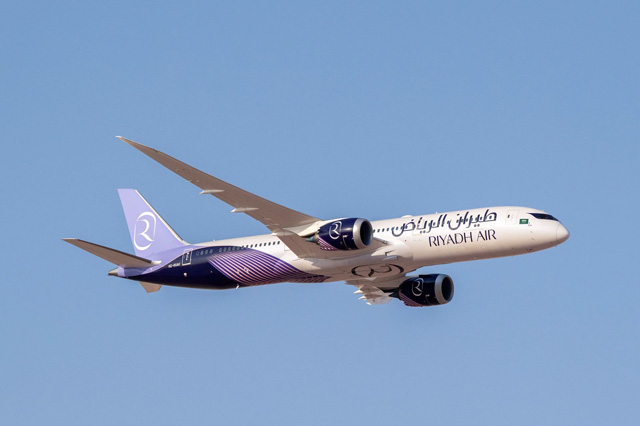
Saudi Arabia has emerged as a major aviation market to watch, with Airbus executives highlighting the launch of Riyadh Air and the Kingdom's efforts to expand its global connectivity under Vision 2030.
Airbus expects annual air trips per person in Saudi Arabia to increase from 1.6 in 2025 to 4.0 by 2045.
“Riyadh Air is providing a new model. Their ambition to connect Riyadh to the world will definitely see quite interesting new routes hit the market in the coming months and years,” Gabriel Semelas, President, Africa and Middle East, Airbus, told Arab News.
Semelas said Airbus currently had a backlog of around 400 aircraft to be delivered to Saudi Arabia, adding that the country's Vision 2030 ambitions and target of handling 330 million passengers would support further growth in the aviation sector.