Daijiworld Media Network - Bengaluru
Bengaluru, Aug 26: The Karnataka High Court has upheld the acquittal of notorious serial killer ‘Cyanide’ Mohan alias Mohan Kumar in the 2006 murder of Shanta at Kollur, holding that the prosecution failed to establish the chain of circumstantial evidence against him.
A division bench comprising Justice H P Sandesh and Justice B Pramod dismissed the State government’s appeal challenging the trial court’s acquittal, finding no error in the lower court’s judgment.
The bench referred to a Supreme Court ruling which holds that in a case based on circumstantial evidence, the benefit of doubt must go to the accused if the chain of circumstances is not complete.
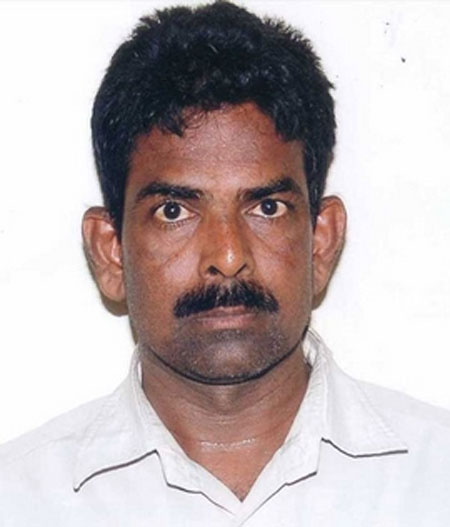
According to the prosecution, Mohan had introduced himself to Shanta, a woman from the Kankanady area of Mangaluru, using the false name ‘Rajesh’. He allegedly won her trust by promising to marry her and took her to Kollur on November 9, 2006.
The prosecution alleged that Mohan had sexual relations with Shanta at a guest house in Kollur. He then allegedly told her to leave her gold jewellery in the room before taking her to a spot near the Swarnamukhi Mantapa behind the Kollur temple.
There, he allegedly gave her cyanide, claiming it was a medicine for abortion. After she died, Mohan allegedly returned to the guest house, collected her gold jewellery and fled.
Shanta’s body was subsequently found near the temple. A doctor who conducted the post-mortem examination had reported the possibility of death due to cyanide poisoning. The body was then buried.
Acting on a complaint lodged by Shanta’s family, police had questioned two persons during the initial investigation.
In 2009, Mohan was arrested in a separate case. During the investigation, the prosecution said his alleged role in the 2006 Shanta murder also came to light.
The police subsequently ordered a fresh investigation and exhumed Shanta’s body for forensic examination. However, by then, the remains had completely decomposed, making it impossible to conclusively establish that she had died specifically from cyanide poisoning.
The court also noted a significant gap in the prosecution’s case: there was no adequate evidence to establish that Mohan had sexually assaulted Shanta, as alleged.
With the prosecution unable to conclusively establish the circumstances linking Mohan to the crime, the High Court held that the benefit of doubt had to be extended to him.
The division bench consequently found no infirmity in the trial court’s acquittal and dismissed the State government’s appeal.