Daijiworld Media Network - Dhaka
Dhaka, Aug 25: At least five more children have died amid a measles outbreak in Bangladesh, taking the number of confirmed and suspected deaths from the disease to 943 this year, local media reported on Tuesday.
According to the Directorate General of Health Services (DGHS), the five deaths were reported in the 24 hours leading up to Tuesday morning and were classified as suspected measles fatalities, Bangladeshi media outlet UNB reported.
The number of confirmed deaths remains at 99, while suspected deaths have risen to 844, taking the combined total to 943.
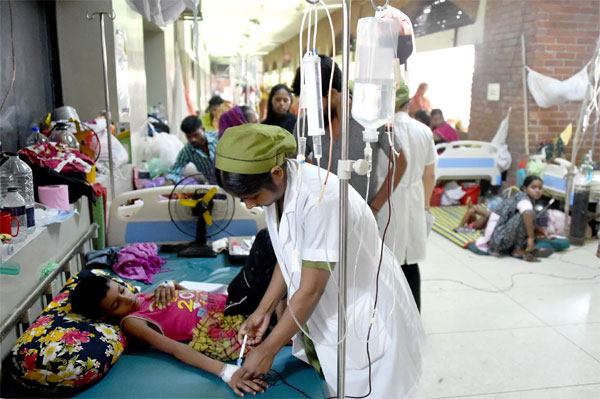
The DGHS recorded 986 new suspected measles cases during the 24-hour period, taking the overall number of suspected cases to 151,638.
Another 91 confirmed cases were reported during the same period, raising the total number of confirmed cases to 18,578.
The sharp rise in infections has prompted growing concern over the country's public health situation. A leading international advocacy group recently described the 2026 measles outbreak as one of Bangladesh's worst public health crises in recent history, stressing that measles is preventable through vaccination.
In its report titled 'Preventable Tragedy: Bangladesh's 2026 Measles Outbreak', Canada-based Global Centre for Democratic Governance (GCDG) said that while the outbreak may have appeared sudden to the public, it was not unexpected from an "epidemiological perspective".
The report attributed the crisis to a combination of disruptions to vaccine supplies and health programmes during 2024-25 under the former interim government led by Muhammad Yunus.
It cited missed routine vaccinations, cancellation of scheduled supplementary immunisation programmes, administrative delays in vaccine procurement and failure to promptly identify populations at risk as contributing factors.
According to the GCDG, Bangladesh had traditionally procured WHO-approved vaccines through UNICEF's international supply chain. However, the interim government replaced the system with an open tender procurement process.
Citing UNICEF, the report said the agency repeatedly warned the interim government about a potential vaccine shortage through five to six formal letters and around 10 meetings held between 2024 and 2026.
Referring to Expanded Programme on Immunisation (EPI) data reported by Bangladeshi daily Samakal, the GCDG said measles vaccination coverage fell to 56.2 per cent in 2025, the lowest level recorded between 2017 and 2025.
The report added that the World Health Organisation (WHO) later identified a nationwide stock-out of the measles-rubella (MR) vaccine during 2024-25, along with gaps in routine vaccination, as major contributors to declining immunity among children and the subsequent 2026 outbreak.