Daijiworld Media Network - New Delhi
New Delhi, Aug 25: The Trump administration has proposed a steep new fee of $103,265 for H-1B petitions subject to the annual visa cap, a move that could significantly increase the cost of hiring skilled foreign workers in the United States and have a major impact on Indian professionals.
The US Department of Homeland Security (DHS) proposed the additional fee in a regulation posted in the Federal Register on Monday. The proposal seeks to impose the charge on all cap-subject H-1B petitions, including those eligible for the advanced-degree exemption, in addition to existing fees. DHS estimates the measure could generate around $8.8 billion annually.
The proposed fee follows the administration's earlier attempt to impose a $100,000 H-1B payment through a presidential proclamation last year. That measure was blocked by a federal court, which ruled that the administration had exceeded its authority. The new proposal uses a formal regulatory process and is based on a different legal framework.
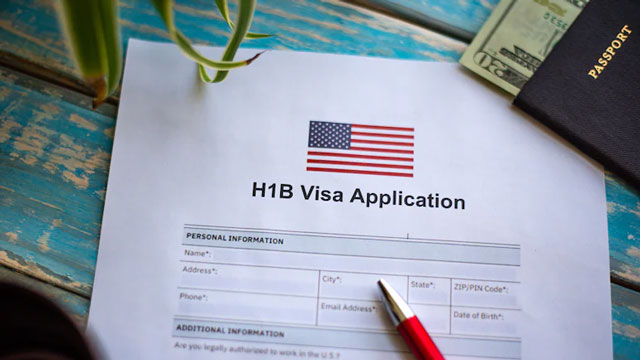
The H-1B programme allows US employers to hire foreign workers in specialised occupations and is widely used by technology companies, universities, hospitals, financial institutions and research organisations. The annual statutory cap is 65,000 visas, with an additional 20,000 places for foreign nationals who hold a master's degree or higher from a US institution.
The proposed $103,265 fee would apply to cap-subject petitions but not to H-1B petitions that are exempt from the annual cap, including certain petitions filed by institutions of higher education and qualifying nonprofit or government research organisations.
The proposal is particularly significant for India because Indian nationals account for a large majority of H-1B beneficiaries. US Citizenship and Immigration Services data for 2024 showed that Indian-born beneficiaries accounted for about 71 per cent of approved H-1B petitions.
Immigration services firm Fragomen had earlier reported that DHS was preparing separate proposals involving H-1B and F-1 Optional Practical Training (OPT) programmes. A proposed OPT fee rule was sent to the White House Office of Management and Budget on August 20, while the proposed H-1B fee rule had cleared OMB review on August 19.
The contents of the OPT proposal had not initially been made public. However, reports indicated that DHS could seek a fee of around $100,000 for OPT applications. OPT allows international students in the F-1 category to obtain temporary employment authorisation after completing their studies, and STEM graduates can generally receive extended work authorisation.
Around 300,000 F-1 students had employment authorisation through OPT last year, according to Bloomberg Government. The programme is an important pathway for many international graduates seeking to gain US work experience and potentially transition to an H-1B visa.
If such an OPT fee is proposed and eventually implemented, it could substantially increase the cost of employing international graduates and make it more difficult for students to remain in the US workforce after completing their studies.
The latest H-1B proposal, however, is not yet final. The public will have an opportunity to submit comments after its publication in the Federal Register, and the rule would have to undergo the regulatory process before it could take effect.
The administration says the proposed H-1B fee is intended to recover federal government costs associated with administering the lawful immigration system. These include immigration benefit adjudication, fraud detection, national security vetting, systems modernisation, immigration court operations, consular processing and labour standards enforcement.
The proposed rule estimates that the additional fee could generate approximately $8.8 billion annually based on 85,000 cap-subject H-1B petitions.
The proposal comes amid a broader tightening of US immigration rules. Earlier this month, DHS also proposed eliminating the existing 60-day grace period for certain unemployed H-1B workers and their dependants. If finalised, the change could require affected workers to leave the US much sooner after their qualifying employment ends.
The combination of higher H-1B costs and possible changes to OPT and post-employment rules could make the US job market significantly more expensive and uncertain for foreign graduates and skilled professionals.
The developments are being closely watched in India, where a large pool of technology professionals and international students relies on the US education and employment system. More than 5.2 million people of Indian origin live in the United States, according to recent estimates based on US Census data.
For now, the $103,265 H-1B charge remains a proposal and does not immediately become a payable fee. Its final scope, implementation date and legal fate will depend on the regulatory process and any challenges that may follow.