Daijiworld Media Network – New Delhi
New Delhi, Aug 19: Older adults in India could face a significantly higher risk from extreme heat as global temperatures rise, with a new study warning that previous assessments may have underestimated the vulnerability of ageing populations.
Published in The Lancet Public Health, the study examined how age affects the human body's ability to cope with extreme heat. Researchers found that older adults can reach the point where their bodies are unable to maintain thermal balance at considerably lower heat levels than younger adults.
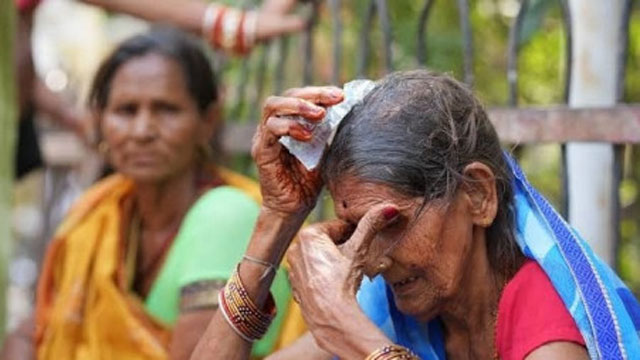
The findings are particularly significant for India, which already experiences severe heatwaves and is expected to see a substantial increase in its older population in the coming decades.
The study estimates that if global temperatures rise by 3°C above pre-industrial levels, more than 80% of India's older adults could experience at least 180 hours of uncompensable heat stress each year.
Uncompensable heat stress occurs when the body can no longer lose heat quickly enough to maintain a stable core temperature. Sweating and increased blood flow to the skin are among the body's natural mechanisms for cooling down, but these responses have limits. Prolonged exposure beyond those limits can lead to serious heat-related illness, including heatstroke.
Researchers found that adults aged 60 and above have a substantially lower heat tolerance than younger adults. Depending on the conditions, their threshold for maintaining a stable core temperature was estimated to be around 4.7°C to 7.5°C lower than that of young adults.
Older people are particularly vulnerable because ageing can reduce sweating efficiency and the body's ability to increase blood flow to the skin. Existing medical conditions and certain medicines can further affect the body's response to heat.
The researchers examined heat exposure under warming scenarios ranging from 1.5°C to 4°C. Their modelling showed that the number of people exposed to uncompensable heat increases sharply as global temperatures rise.
At 3°C of warming, more than four in five older adults in India could experience at least 180 hours of such heat stress annually. Researchers stressed that this does not mean all those exposed would necessarily suffer heatstroke or die. Rather, it indicates exposure to conditions under which the body struggles to maintain thermal balance.
The study also found that the risk extends beyond extreme cases of heatstroke. Prolonged heat can place additional strain on the cardiovascular system and may worsen existing heart, kidney and respiratory conditions. This makes older adults with chronic illnesses particularly vulnerable during prolonged periods of high heat.
One of the study's key concerns is that earlier assessments often relied on heat-tolerance thresholds derived mainly from healthy young adults and applied them across wider populations. By incorporating age-specific physiological responses, the researchers found substantially greater exposure among older adults.
Globally, the researchers estimate that the number of people aged 60 and above exposed to at least 180 hours of uncompensable heat annually could be two to eight times higher than earlier projections that assumed the same heat tolerance across age groups.
At 1.5°C of global warming, around 22% of people aged 60 and above worldwide, or approximately 290 million people, could experience at least one month of uncompensable heat each year, according to the study.
The growing elderly population adds another dimension to the threat. The global population aged 60 and above is projected to reach about 2.1 billion by 2050, roughly twice its 2020 level. Much of this increase is expected in low- and middle-income countries, including India.
The findings underline the need for heat-health measures that account for age-related vulnerability. During heatwaves, older adults can reduce their risk by staying in cooler surroundings, avoiding strenuous activity during the hottest hours, maintaining adequate fluid intake when medically appropriate and following local heat-health advisories.
Families and communities can also help by regularly checking on older relatives and neighbours during periods of extreme heat. People with existing health conditions should follow medical advice, particularly when taking medicines that may affect hydration, blood pressure or the body's response to heat.
The researchers said heat action plans may need to become more age-specific and region-specific rather than relying only on broad temperature thresholds. India's varying climate, housing conditions, access to cooling and healthcare can all influence how people experience extreme heat.
The study also acknowledged that heat tolerance can vary between populations and that some people living in consistently hot climates may develop a degree of acclimatisation. However, the researchers said this did not alter the main conclusions of their analysis.
The broader warning is clear: the same temperature does not pose the same health risk to everyone. As the planet warms and populations age, older adults could face dangerous physiological heat more frequently and for longer periods than previously estimated.