Daijiworld Media Network - Gaza City
Gaza City, Jul 30: Gaza's healthcare system is facing an escalating humanitarian crisis, with severe shortages of medical supplies, damaged hospitals and limited treatment facilities placing thousands of patients at risk, according to healthcare workers and local health authorities.
At al-Shifa Hospital in Gaza City, dialysis units continue to operate under immense pressure as patients with kidney failure struggle to access life-saving treatment. Fourteen-year-old Ruwaa Muntasir Abdul Karim, who requires regular dialysis to survive, is among hundreds of patients affected by reduced treatment capacity.
Her father said she previously led a normal life before developing kidney disease and now depends entirely on dialysis sessions. He added that any interruption in treatment causes severe fatigue and breathing difficulties.
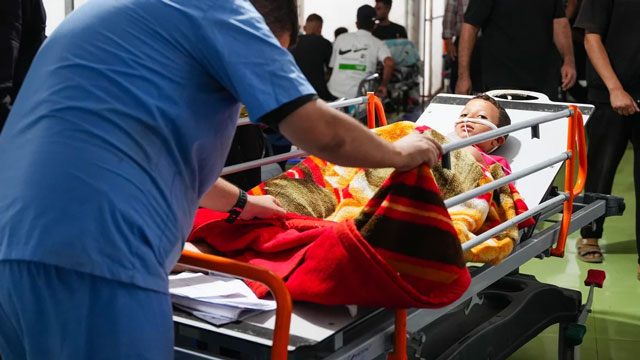
According to the Palestinian Ministry of Health, nearly half of Gaza's dialysis machines are no longer functioning because of a shortage of sodium bicarbonate, an essential component required for dialysis. The number of hospitals providing dialysis services has also fallen from seven to four after damage to healthcare facilities during the conflict.
Health authorities estimate that before the war around 1,200 people in Gaza were receiving dialysis treatment. That number has dropped to about 700, with hundreds of patients reportedly dying due to interrupted dialysis sessions and shortages of essential medicines.
Dr Osama Abu Rahma, head of the kidney department at Al-Aqsa Hospital, said only 26 of the hospital's 51 dialysis machines remain operational, forcing doctors to reduce both the frequency and duration of treatment sessions. He warned that the reduced care has led to increased complications, including breathing difficulties, heart and lung problems, and dangerously high potassium levels among patients.
For many patients, kidney transplantation remains the only long-term solution. Ruwaa's father said her mother has been identified as a compatible donor, but the transplant has been delayed for months as the family awaits approval to travel outside Gaza for the procedure.
The healthcare crisis extends beyond dialysis services. The World Health Organization estimates that more than 43,000 people in Gaza have sustained life-changing injuries during the conflict, including thousands of amputations requiring long-term rehabilitation.
Medical professionals say rehabilitation centres face severe shortages of prosthetic limbs, wheelchairs and crutches, leaving many patients unable to regain mobility. Physiotherapist Aya al-Shaltouni said the demand for mobility aids far exceeds available supplies, limiting recovery despite ongoing rehabilitation efforts.
Among those affected is 60-year-old farmer Zaki Jumaa Salem Abu Harb, who lost a leg in 2025. Although he recently received a prosthetic limb after months of waiting, he said many amputees continue to rely on improvised supports because they lack even basic mobility equipment.
Healthcare workers also warned of a worsening mental health crisis, with repeated displacement, loss of family members and prolonged conflict contributing to widespread depression, anxiety, post-traumatic stress disorder, insomnia and panic attacks.
Psychologist Asil Abu Shaweesh said the need for psychological support has grown significantly, affecting both adults and children. She noted that children frequently experience nightmares, behavioural changes, bedwetting and severe anxiety, while mental health professionals themselves continue to work under difficult conditions marked by insecurity, limited resources and overwhelming demand.
Medical experts said addressing both the physical and psychological consequences of the conflict will require sustained humanitarian support and improved access to essential healthcare services.