Daijiworld Media Network – Washington
Washington, Jul 19: The United States has intensified its military campaign against Iran, with President Donald Trump indicating that airstrikes will continue after the collapse of a fragile truce, while offering little clarity on the duration or ultimate objective of the operation.
The renewed offensive comes a week after the US resumed daily strikes on Iran and reimposed a naval blockade on Iranian ports.
According to reports, Trump has been presented with options to further expand military operations as US forces seek to weaken Iran's control over the strategically vital Strait of Hormuz. However, Iran has shown no indication of relinquishing its influence over the key shipping route.
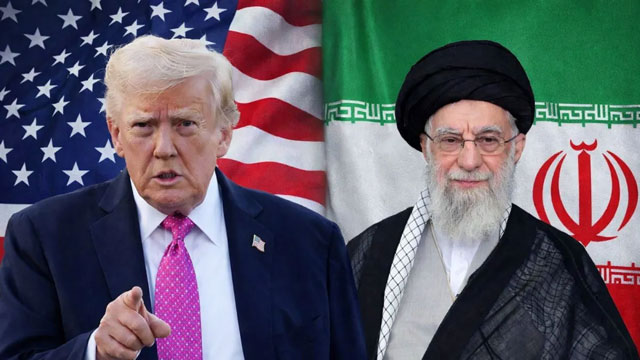
In recent public remarks, Trump signalled his intention to escalate the campaign, including possible strikes on civilian infrastructure and energy-related targets, while dismissing concerns over the length of the conflict.
"We were in Vietnam for 19 years. We're here for four months, so I think we've done a lot," Trump told CNN.
In a separate interview with Fox News on Tuesday, the President said the strikes would "continue until I say it's enough."
During a primetime address on Thursday, in which he made only a brief reference to Iran, Trump added, "You will see the fruits of that labour very, very shortly."
Vice President JD Vance, who has led the administration's negotiations with Iran, cautioned that military action alone would not be sufficient to eliminate Iran's control over the Strait of Hormuz.
"You can bomb them, you can take away their radar, you can take away some of their drones and some of their missiles, but it's just too easy to fire at ships in the straits. So, you've got to actually be willing to talk and to try to figure out the problem," Vance said in a podcast interview.
Former US ambassador Ryan Crocker echoed that view, saying sustained bombing would not force Iran into submission.
Speaking to CNN, Crocker said that attempting to bomb Iran "into submission" was unlikely to succeed, underscoring the need for a diplomatic solution alongside military measures.