Daijiworld Media Network – New Delhi
New Delhi, Jul 5: Artificial intelligence (AI) can significantly improve surgeons' ability to identify key pelvic anatomical structures during pelvic lymph node dissection, enhancing both sensitivity and specificity across multiple surgical specialties, according to a new study.
Pelvic lymph node dissection is commonly performed in colorectal, gynaecological and urological surgeries. However, the complex anatomy of the lateral pelvis and natural anatomical variations often make the procedure technically challenging, increasing the risk of complications if vital structures are not accurately identified.
To address this challenge, researchers developed an AI model to assist surgeons in recognising critical pelvic anatomy during the procedure.
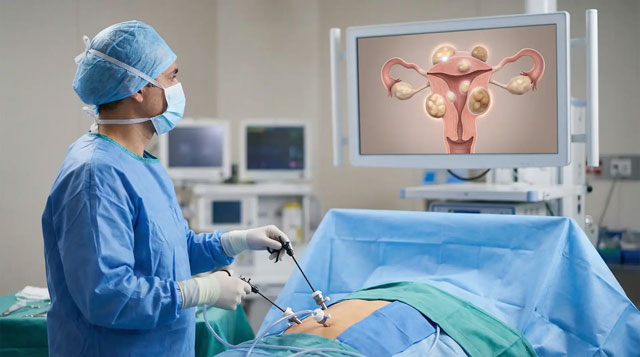
The study involved 36 surgeons from colorectal, gynaecological and urological specialties with varying levels of experience. Participants reviewed 640 video clips, each lasting 0.5 seconds, extracted from pelvic lymph node dissection procedures.
The AI model was trained using 23,259 annotated images and 653 unannotated images obtained from 293 surgical videos. It was designed to identify important anatomical structures, including the ureter, obturator nerve, external iliac artery and external iliac vein.
During threefold cross-validation, the model achieved Dice similarity coefficients of 0.6483 for the ureter, 0.8654 for the obturator nerve, 0.8619 for the external iliac artery and 0.8736 for the external iliac vein, indicating high accuracy in recognising most key structures.
Researchers found that AI assistance significantly improved surgeons' sensitivity and specificity in identifying pelvic anatomy during assessment, with statistical significance (p<0.001).
The improvements were observed across colorectal, gynaecological and urological surgeons, irrespective of their level of experience, suggesting that AI-based support could benefit both experienced specialists and less-experienced surgeons.
The researchers said the technology has the potential to enhance surgical precision during pelvic lymph node dissection across specialties. However, they noted that further studies involving continuous real-time use during live operations are needed before the system can be routinely adopted in clinical practice.