Daijiworld Media Network – Panaji
Panaji, Jun 17: As delayed and uneven monsoon rains heighten concerns over a possible water shortage next year, the Goa government has announced plans to make rainwater harvesting and groundwater recharge mandatory for borewell users. However, environmentalists and water conservation experts say the move is a delayed response to a crisis that has been developing for years.
Chief Minister Pramod Sawant recently directed the Water Resources Department (WRD) to issue a circular requiring all borewell users to undertake water conservation measures, citing forecasts of below-normal rainfall.
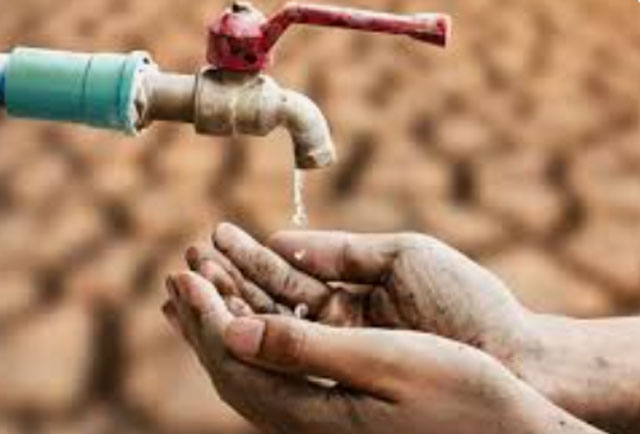
"Rainfall is expected to be lower this year, making water conservation extremely important. It is necessary to conserve water and recharge reservoirs, wells and groundwater sources. We must save water wherever possible; otherwise, there could be a major water availability crisis next year," Sawant said.
Experts, however, argue that the state's water problems stem from long-standing issues such as unchecked groundwater extraction, rampant concretisation, destruction of forests and laterite plateaus, pollution of water sources, and weak enforcement of existing regulations.
Water conservation expert Luis Pinto welcomed the government's proposal but pointed out that Goa already has rules mandating rainwater harvesting, which are often ignored.
"It is not about whether there is a rainfall deficit or not. If water harvesting is not undertaken, permission should not be granted for any project. However, it is not being implemented because of corrupt practices," Pinto said.
He stressed that rainwater harvesting should be compulsory for all households and development projects.
"Each and every person should do it on their own premises. Everybody should do it compulsorily. The water level in their own wells will rise once they undertake water harvesting," he added.
Architect and environmentalist Tallulah D'Silva warned that Goa is already facing a severe water crisis and criticised the lack of public awareness regarding available conservation incentives.
"We are in a deep water crisis and the government and people are only just waking up to it," she said, noting that subsidies of up to Rs 1 lakh for rainwater harvesting have remained largely underutilised.
D'Silva attributed the crisis not only to erratic rainfall but also to extensive loss of green cover and environmental degradation.
"Trees are responsible for rainwater percolation, so don't cut them. Goa has lost a large extent of its green cover. We are all responsible for it. The government too," she said.
She also highlighted the destruction of laterite plateaus, which function as natural water reservoirs and help recharge aquifers, due to increasing construction activity and concretisation.
In addition, D'Silva raised concerns over groundwater pollution caused by sewage, plastic waste and other contaminants, as well as the widespread use of unregulated borewells.
"Most borewells are illegal. They are responsible for drying up wells. There is no accountability," she said.
According to D'Silva, relatively inexpensive recharge pits costing around Rs 10,000 can significantly improve groundwater replenishment and help mitigate future shortages.
"If we don't take these measures, we are doomed," she warned.
Experts maintain that while the government's latest initiative is a step in the right direction, effective enforcement, public participation and long-term environmental protection will be crucial to preventing a full-blown water crisis in Goa.