Daijiworld Media Network - New Delhi
New Delhi, Apr 7: The Supreme Court of India on Tuesday was informed that the Centre will address all pending concerns related to CCTV installation in police stations across the country within the next two weeks.
Attorney General R Venkataramani told a bench comprising Justices Vikram Nath and Sandeep Mehta that he is reviewing the matter and that several steps are already underway.
The Union Home Ministry Secretary appeared before the court following its April 6 direction seeking assistance on the implementation of the nationwide CCTV scheme. The case is being heard as part of a batch of petitions, including a suo motu matter concerning non-functional CCTV systems in police stations.
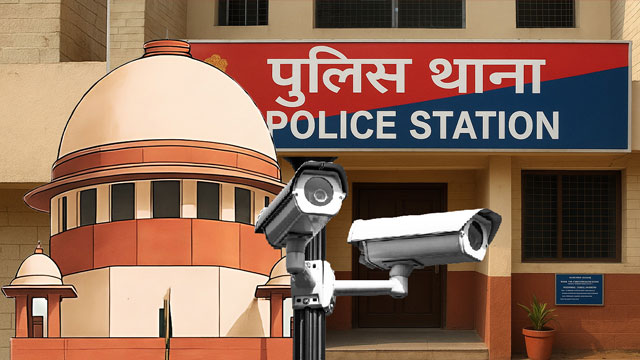
During the hearing, Justice Nath expressed concern over the level of representation by the Centre, noting that only an under secretary had attended an earlier meeting chaired by the amicus curiae. The bench questioned the adequacy of such representation, prompting the Attorney General to assure that he would hold meetings with senior officials to expedite progress.
The court also referred to submissions highlighting the success of Kerala in implementing an efficient CCTV monitoring system. The bench suggested that instead of states developing separate software, the Centre could consider directing them to adopt the Kerala model. It was noted that Kerala, Madhya Pradesh and Rajasthan have already established centralised monitoring dashboards.
The Attorney General assured that all outstanding issues would be resolved within two weeks. The bench recorded the assurance and scheduled the next hearing for April 28, allowing the amicus to submit a fresh status report. The Centre may also file an affidavit if required.
The court clarified that the personal presence of the Home Secretary would not be necessary in future hearings unless specifically directed.
The matter relates to long-standing compliance with court orders on CCTV installation. In 2018, the apex court had mandated installation of CCTV cameras in police stations to prevent human rights violations. In December 2020, it expanded the directive to include investigative agencies such as the Central Bureau of Investigation, Enforcement Directorate and National Investigation Agency.
States and Union Territories were directed to ensure coverage at all sensitive and common areas in police stations, with systems equipped with night vision and the capability to store audio and video data for at least one year.