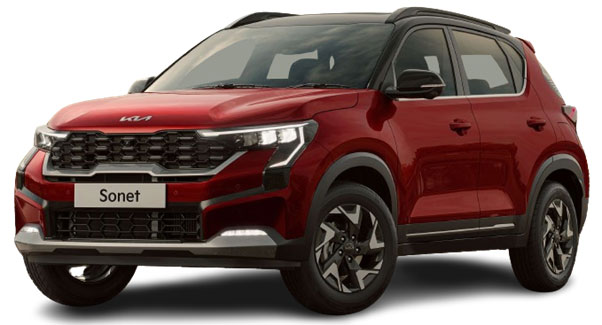
The compact SUV segment in India has expanded rapidly, offering buyers a wide range of options across price points, features, and powertrain configurations. While this variety offers flexibility, it also introduces the “paradox of choice.” When faced with too many options, decision-making can become more complex rather than easier. The Kia Sonet illustrates this dynamic clearly, offering multiple variants, engine options, and feature combinations within a single model.
Rather than simplifying the buying process, such diversity can create both opportunity and confusion.
Understanding the Paradox of Choice
The paradox of choice refers to the idea that while consumers value having options, an excessive number of choices can lead to decision fatigue. Instead of feeling empowered, buyers may feel overwhelmed, uncertain, or hesitant.
In the context of compact SUVs, this phenomenon is particularly relevant. Buyers must consider:
- Engine type (petrol, turbo petrol, diesel)
- Transmission options (manual, iMT, automatic, DCT)
- Variant levels with different feature combinations
- Budget constraints and long-term usage
The Kia Sonet offers a wide range of these choices, reflecting manufacturers' efforts to cater to diverse buyer preferences.
Multiple Powertrains and Configurations
The Sonet’s lineup includes:
- 1.2L petrol engine
- 1.0L turbo petrol engine producing 88 kW and 172 Nm torque
- 1.5L diesel engine producing 85 kW and 250 Nm torque
Each engine is paired with multiple transmission options, including manual, iMT, automatic, and dual-clutch systems.
While this diversity allows buyers to tailor the vehicle to their needs, it also introduces complexity. A buyer must evaluate not only performance but also fuel efficiency, maintenance costs, and driving patterns.
The abundance of choices requires greater decision-making effort.
Variant Complexity and Feature Layers
Beyond powertrains, the Sonet offers multiple variants with varying feature sets. Higher variants include:
- Ventilated front seats
- Bose premium 7-speaker sound system
- 26.03 cm touchscreen infotainment system
- 360-degree camera and blind view monitor
Lower variants retain essential features but may omit some advanced systems.
This layered approach allows buyers to select features based on budget, but it can also create uncertainty about which variant offers the best value.
The challenge lies in determining whether additional features justify the incremental cost.
The Role of Technology in Decision-Making
Technology plays a significant role in the paradox of choice. The Sonet integrates Kia Connect with over 70 connected features, including remote vehicle control, navigation, and diagnostics.
While these features enhance convenience, they also increase decision-making complexity. Buyers must assess how frequently they will use such features and whether they align with their lifestyle.
Technology can therefore act as both an attraction and a source of indecision.
Buyer Psychology in a Feature-Rich Segment
In a segment where multiple vehicles offer similar dimensions and performance, features often become the primary differentiator. Buyers may feel pressure to choose a variant that offers “more” to avoid missing out on desirable features.
This fear of missing out (FOMO) can lead to over-analysis, delaying purchase decisions. Alternatively, some buyers may choose higher variants primarily for reassurance rather than necessity.
The Sonet’s extensive feature list exemplifies how modern vehicles cater to this psychological aspect of decision-making.
Simplifying Choices Through Comparison
To manage this complexity, buyers increasingly rely on digital platforms. Online car-buying platforms such as ACKO Drive allow users to compare variants, features, and powertrain options side by side before booking online.
Such tools help reduce decision fatigue by presenting structured information, enabling buyers to identify configurations that align with their priorities.
Digital comparison, therefore, plays a crucial role in navigating the paradox of choice.
Balancing Flexibility and Clarity
From a manufacturer’s perspective, offering multiple options increases market reach. However, it also requires careful structuring to ensure that buyers can navigate choices effectively.
The Sonet’s range reflects an attempt to balance flexibility with accessibility. By offering distinct combinations of features and powertrains, it caters to both entry-level buyers and those seeking premium experiences.
The challenge lies in maintaining clarity within this diversity.
Conclusion
The Kia Sonet highlights the paradox of choice within the compact SUV segment. Its wide range of powertrains, variants, and features provides flexibility but also introduces complexity in decision-making.
For buyers, the key lies in identifying priorities and focusing on features that align with actual usage rather than perceived value. For manufacturers, the challenge is to offer variety without overwhelming consumers.
In a market defined by increasing options, the ability to simplify choice may become as important as the options themselves.