Buying meat online can feel like a smart move until the box shows up and something looks off. Maybe the steaks are thinner than you expected, the mince has more fat than you wanted, or the delivery timing throws dinner plans into chaos.
Ordering from an online butcher or meat delivery service should make life easier, not more stressful. But because you cannot inspect the product in person, small details matter much more than they do in a physical store.
The good news is that most disappointing orders happen for the same reasons. Once you understand what to check before placing an order, buying meat online becomes far more reliable.
This guide explains the most common mistakes shoppers make and how to avoid them so your next order arrives exactly as expected.
Choosing the Right Cut for Your Recipe
One of the most common mistakes when ordering meat online is choosing the wrong cut. Different cuts are designed for different cooking methods, and using the wrong one can quickly ruin a meal.
For example, steaks intended for quick pan cooking behave very differently from cuts designed for slow braising. If you attempt to cook a slow-cook cut quickly, the result is often tough and chewy. On the other hand, cooking a tender steak cut too slowly can cause it to fall apart and lose its texture.
The key is to think about the dish first and then select the cut that suits the cooking method. Many online butchers include cooking suggestions on product pages, which can be helpful when deciding what to order.
Always Check Where the Meat Comes From
The word “premium” appears everywhere in online meat marketing, but it does not always mean much on its own.
A reliable online butcher should clearly explain where their meat is sourced. This may include details about the farm or region, the breed of animal, and how the animals were raised or processed.
Transparency is usually a strong indicator of quality. When a retailer openly shares information about sourcing and farming practices, it suggests they are confident in the product they are selling.
If those details are vague or missing entirely, it may be worth slowing down and looking more closely before placing an order.
Understanding Grass-Fed vs Grain-Fed Beef
Another factor that can affect flavour and cooking performance is how the animals were fed.
Grass-fed beef is typically leaner and often has a slightly firmer texture with a stronger, more pronounced beef flavour. Grain-fed beef tends to contain more marbling, which creates a softer texture and richer taste when cooked.
Neither option is automatically better. The best choice depends on personal preference and the type of meal you are preparing. For example, some people prefer the robust flavour of grass-fed beef, while others enjoy the buttery texture that comes from grain-fed cuts.
Checking the feeding method before placing an order helps ensure the meat you receive matches your expectations.
Check Labels on Pre-Seasoned or Marinated Meat
Pre-seasoned or marinated meat can be convenient on busy evenings, but it can also hide important details about the product.
Many ready-made marinades contain large amounts of salt, sugar, or additives that can overpower the natural flavour of the meat. In some cases, heavy seasoning may even mask lower-quality cuts.
For this reason, many experienced cooks prefer ordering plain cuts and seasoning them at home. Doing so provides greater control over flavour and makes it easier to avoid unwanted ingredients.
Reading the ingredient list is especially important if anyone in your household has food allergies or dietary restrictions.
Not All Mince and Sausages Are Equal
Ground meat and sausages vary widely in quality between retailers, even when they appear similar at first glance.
Some premium mince is carefully prepared with a balanced fat ratio and fresh meat, while other versions may contain excess fat or inconsistent trimming. Sausages can vary even more, depending on the meat content, seasoning, and the amount of filler used in the recipe.
A trustworthy online butcher will usually provide details about fat percentage, ingredients, and packaging methods. These small details help shoppers understand exactly what they are buying.
If a product page relies heavily on photos but offers little information about the contents, it may be worth taking a closer look before adding the item to your cart.
Pay Attention to Fat Content
Fat plays a major role in the taste and texture of meat. Cuts with higher fat content often produce richer flavour and juicier results when cooked, while leaner cuts deliver a lighter and more delicate texture.
For example, rib-eye or scotch fillet steaks contain more marbling than leaner cuts like eye fillet. Chicken thighs are generally more forgiving and juicy than chicken breasts, which can dry out if overcooked.
Understanding fat levels helps ensure the meat you order performs well for the dish you are preparing.
Consider Aged Meat for Better Flavour
Aging is another factor that can significantly influence the quality of meat.
During the aging process, natural enzymes break down muscle fibres, which improves tenderness and deepens flavour. Dry-aged beef in particular develops a stronger, more complex taste, although it is usually more expensive due to the time and product loss involved.
Wet-aged beef is more common in many meat delivery services and still provides noticeable improvements in tenderness.
If you are ordering steaks for a special meal, choosing aged meat can elevate the overall experience.
Check Packaging and Storage Details
Because you cannot inspect the meat in person when buying online, packaging becomes extremely important.
Reliable retailers clearly explain how their products are packed and transported. This typically includes details about whether the meat is vacuum sealed, chilled, or frozen before shipping.
Temperature control is essential for maintaining freshness. Good meat delivery companies usually use insulated packaging and cold packs to keep products at safe temperatures during transport.
They should also provide guidance on how to store the meat once it arrives at your home.
Look for Freshness Signals
Freshness begins long before the order reaches your doorstep. The information provided on the retailer’s website can offer useful clues about how carefully the product is handled.
For example, many reputable sellers provide details about packing dates, delivery windows, and storage instructions. These signals show that the retailer is thinking carefully about product quality and food safety.
When the delivery arrives, open the package promptly. The contents should feel cold and the packaging should appear sealed and undamaged.
If something looks unusual or the meat arrives warm, it is best to contact the retailer immediately.
Plan Ahead for Frozen Meat
Frozen meat is common in online delivery because freezing helps preserve quality during shipping.
However, frozen products require a little planning. The safest way to thaw meat is in the refrigerator, allowing it to defrost slowly while remaining within a safe temperature range.
Thinking about your weekly meals before placing an order can help ensure the meat is ready when you need it.
Quick Checklist Before Ordering Meat Online
Before placing an order, it helps to run through a quick checklist:
- Confirm the cut suits your cooking method
- Check where the meat is sourced
- Review feeding methods such as grass-fed or grain-fed
- Look for fat content or marbling details
- Confirm portion size and pack weight
- Check ingredient lists for processed items
- Review delivery timing and packaging
- Plan storage or thawing after delivery
This simple review only takes a moment but can prevent many common ordering mistakes.
Comparison Table for Common Online Meat Choices
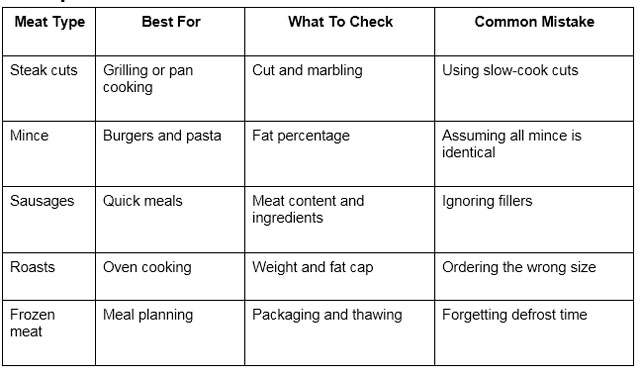
Buying meat online becomes much easier once you know what to check before placing an order.
Most disappointing purchases happen when shoppers rush the process or rely on photos instead of product details. Paying attention to factors such as the cut, sourcing, fat content, packaging, freshness, and delivery timing can make a significant difference.
With a little attention to detail, ordering from an online butcher or meat delivery service can become one of the easiest and most reliable ways to buy quality meat.