Daijiworld Media Network - Washington
Washington, Feb 13: US President Donald Trump said his administration has effectively brought wind energy development in the country to a standstill, describing it as the “most expensive energy” available.
Speaking to reporters at the White House, Trump said, “We’ve basically stopped all windmills in this country,” adding that his administration is working to ensure no new wind projects move forward during his tenure.
The President claimed that a majority of wind turbines are manufactured overseas. “They’re all made in China, a little bit in Germany, but mostly in China,” he said, raising concerns about foreign dependence in the renewable energy supply chain.
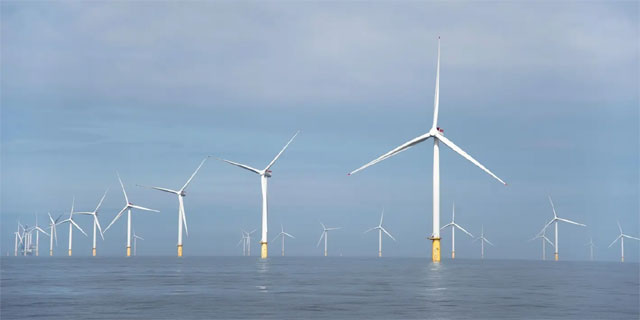
Trump also criticised wind installations for their visual and environmental impact, arguing that turbines damage landscapes and harm bird populations. He further stated that the government is reviewing and attempting to cancel certain previously approved contracts. “We inherited some contracts where they’ve gone down the line a little bit. We’re trying to terminate them for a lot of different reasons,” he said.
Among the concerns cited were potential risks to military operations and aviation safety. Trump indicated that these factors are being considered as part of the administration’s broader reassessment of wind energy agreements.
Describing wind turbines as a “tremendous eyesore,” the President said he hopes no new projects will be constructed during his administration.
The remarks came as part of a wider defence of fossil fuel expansion and efforts to roll back climate-related regulations. Over the past decade, wind energy has expanded significantly across the United States, driven by federal tax incentives and state-level renewable energy mandates.
The renewable energy sector has also become a focal point of international competition, particularly with China playing a dominant role in segments of the global clean energy supply chain. Shifts in US climate and energy policies are closely watched worldwide, as they can influence global investment flows, technological development, and supply chain dynamics in the renewable energy industry.