Daijiworld Media Network - Washington
Washington, Feb 11: US President Donald Trump has indicated that the United States has significantly increased its military presence near Iran, while also suggesting that Tehran may be inclined toward negotiations.
In an interview, Trump pointed to what he described as a substantial naval deployment in the region. “We have a massive flotilla heading toward Iran right now. We’ll see how things unfold,” he said, underscoring heightened American military readiness.
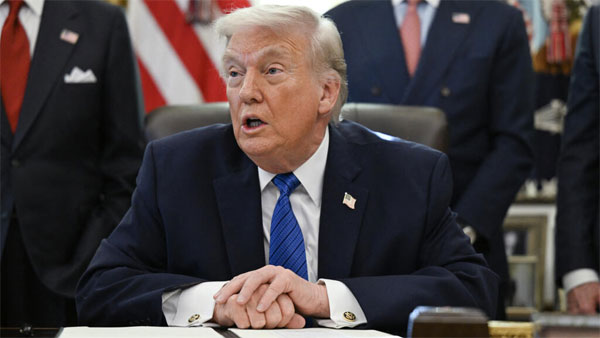
At the same time, Trump expressed the view that Iran could be open to dialogue. “I believe they want to reach an agreement. It would be unwise for them not to,” he remarked, adding that any potential deal must comprehensively address Washington’s key concerns.
According to Trump, a future agreement would need to strictly curb Iran’s nuclear ambitions and missile capabilities. “It has to be a strong deal — no nuclear weapons, no missiles, none of the elements that pose a threat,” he said.
However, he also cast doubt on whether Tehran could be trusted to uphold such an agreement, noting that some observers question the reliability of the current Iranian leadership.
Trump sharply criticised previous US administrations for their handling of Iran policy. He described the nuclear agreement negotiated under former President Barack Obama and continued under President Joe Biden as deeply flawed. “The Iran nuclear deal was one of the worst agreements I’ve seen,” he said, accusing earlier leaders of emboldening Tehran.
He further referenced past US actions targeting Iranian nuclear infrastructure, suggesting that additional measures could not be ruled out. “We dealt with their nuclear capability before, and we’ll determine what needs to be done going forward,” he stated.
Trump linked the current military posture and diplomatic messaging to his broader strategy of combining economic and security tools to advance US interests. He reiterated his belief in the effectiveness of trade measures, claiming that tariff pressure had played a decisive role in resolving multiple international disputes during his tenure.
The remarks come against the backdrop of continuing tensions over Iran’s nuclear programme and its activities across West Asia — issues that carry implications for regional stability, global energy markets and maritime security.
Developments in the Gulf region are also closely watched by countries such as India, which maintains longstanding economic and strategic ties with Iran and depends significantly on energy supplies and secure shipping routes through the region.