Daijiworld Media Network - Panaji
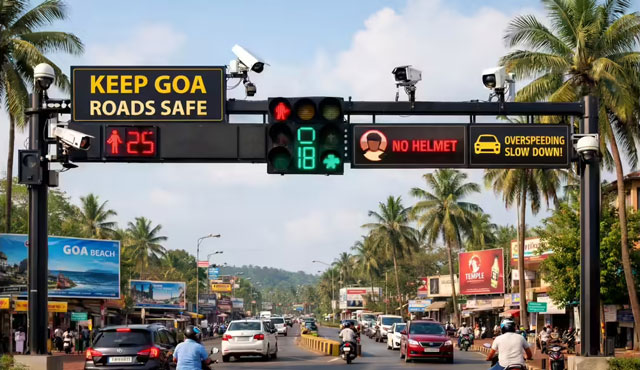
Panaji, Feb 3: As part of an ambitious road safety enforcement drive, artificial intelligence-based traffic surveillance will be rolled out at 14 major junctions in South Goa in the first phase, with AI-enabled signals and cameras set to begin live monitoring by the end of February.
Transport Director Pravimal Abhishek said the AI-based Traffic Management System and e-challaning project is currently in the testing phase and will be activated in stages across the State. “Testing is going on and these locations will be made live by this month-end. The system is capable of detecting both static and dynamic violations and will automatically generate challans,” he said.
The first-phase rollout in South Goa will cover key junctions including Old Market junction, Fatorda junction, Arlem Circle, Bolshe Circle, Munj Vihara, Power House Circle, Gorvotti junction, Goa Ceramic junction, Tata showroom junction, Nuvem bypass junction, the Missing Link at Loutolim, Navelim junction, Bellem junction and Birla Cross junction. In North Goa, Merces junction has also been brought under the broader project framework.
Abhishek said the remaining identified junctions across Goa will be brought under live surveillance in a phased manner once testing and calibration are completed.
According to details shared earlier, the AI-enabled system is designed to ensure evidence-based enforcement, reducing dependence on manual policing while enabling round-the-clock monitoring. The smart cameras will be capable of detecting a range of traffic violations, including triple-seat riding, number plate irregularities and other offences.
The revival of the Merces junction signal assumes significance as the AI-powered signal there had remained non-functional for nearly three years. It was earlier reported that the system is designed to detect violations and generate challans without human intervention, even as the government is yet to finalise whether the Traffic Department or the Transport Department will act as the enforcing authority.
With the first phase now set to go live, the government said the initiative is expected to bring greater consistency, transparency and accountability to traffic enforcement across the State.