Daijiworld Media Network - Jerusalem
Jerusalem, Jan 10: Israeli Prime Minister Benjamin Netanyahu has said Israel aims to gradually end its dependence on American military aid, while also addressing the country’s global image crisis and ongoing anti-regime protests in Iran, in an interview with The Economist published on Friday.
For the first time publicly, Netanyahu indicated that Israel may not fully renew the annual USD 3.8 billion US military assistance package when it comes up for renegotiation in 2028. He said his long-term objective is to reduce Israel’s reliance on American support to zero within the next decade, adding that the process is already “in progress”.
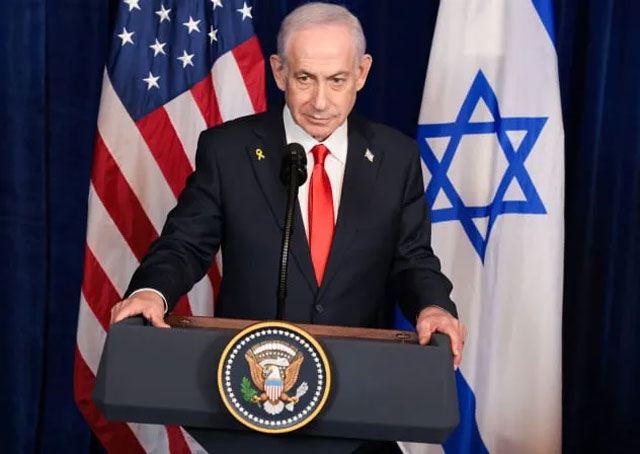
Despite this, Netanyahu said he would “continue to fight for the allegiance of the American people”, underlining the importance of strong ties with the US even as Israel seeks greater self-reliance. He noted that becoming more independent financially and militarily would also help Israel counter what he described as a global propaganda war against it.
“I’d like to do everything I can to fight the propaganda war waged against us,” Netanyahu said, claiming that social media is “flooded” with misinformation, bots and coordinated campaigns. He likened Israel’s efforts to counter this narrative to “using cavalry against F-35s”.
The Prime Minister argued that vilification historically directed at Jewish people has now shifted to the Jewish state. He said Israel is judged by what he called “impossible standards”, particularly in the context of the Israel-Hamas war, and questioned whether leaders like Winston Churchill could have prosecuted World War II under similar levels of real-time global scrutiny.
Netanyahu suggested that international criticism of Israel may ease once intense fighting subsides, adding that propaganda often overtakes facts during periods of active conflict.
On Iran, Netanyahu said regime change is not Israel’s stated objective, but could emerge as a consequence of recent developments. Referring to joint US-Israeli strikes in June 2025 that severely damaged Iran’s nuclear capabilities, he said the attacks had reduced Iran from a pre-eminent power to what he termed a second-rate one.
He added that Iran’s military setback, combined with what he described as gross mismanagement of domestic affairs and massive spending on proxy groups instead of public welfare, could have serious implications for the regime’s future. “These two things are meeting now,” he said, adding that it could be a moment when Iranians “take charge of their own destiny”.
Netanyahu stressed that Israel has no plans to intervene in Iran’s internal protests, saying revolutions are best driven from within. However, he warned that Israel would respond forcefully if Iran were to launch any attack. “If Iran attacks us, which they might, then there will be horrible consequences for Iran,” he said, adding that otherwise Israel would closely watch developments inside the country.