Daijiworld Media Network - Tehran
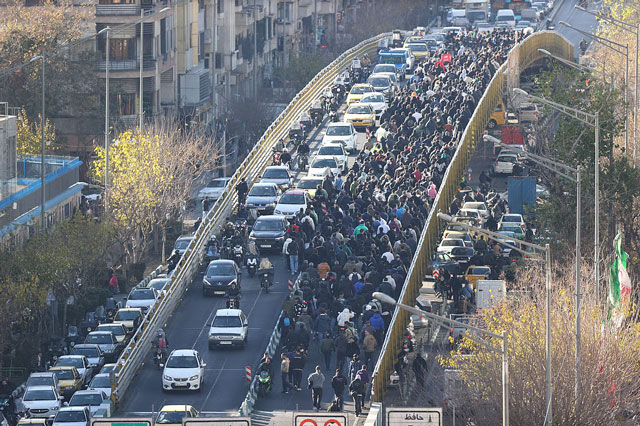
Tehran, Jan 9: Iran’s government shut down internet access and international telephone services late Thursday as fresh protests erupted across the country following a call for demonstrations by exiled crown prince Reza Pahlavi. The move came as thousands of Iranians shouted slogans from their windows and took to the streets in cities and rural towns, underscoring growing public anger over the country’s worsening economic crisis.
The nighttime demonstrations, which continued into Friday morning, marked the first major test of whether Pahlavi — son of the last shah who fled Iran ahead of the 1979 Islamic Revolution — could influence the protest movement. Chants included slogans against Supreme Leader Ayatollah Ali Khamenei and the Islamic Republic, while some protesters openly voiced support for the shah, a stance that once carried the death penalty but now reflects deep public discontent.
Internet monitoring firms Cloudflare and NetBlocks confirmed the nationwide outage, attributing it to government action. International calls into Iran could not be connected. Similar blackouts in the past have preceded harsh crackdowns by authorities. Iranian state television did not acknowledge the shutdown, instead broadcasting routine programming highlighting food subsidies.
According to the US-based Human Rights Activists News Agency, protests in recent days have led to at least 42 deaths and more than 2,270 detentions. Markets and bazaars in several regions also remained shut in solidarity with demonstrators.
Despite the scale of the unrest, the protests remain largely leaderless. Analysts note that the absence of a unified leadership has weakened previous movements. “The lack of a viable alternative has undermined past protests in Iran,” said Nate Swanson of the Atlantic Council.
Pahlavi, speaking after communications were cut, accused the regime of silencing the people. “Iranians demanded their freedom tonight. In response, the regime has cut all lines of communication,” he said, urging European leaders to join US President Donald Trump in pressuring Tehran to restore connectivity.
Iranian authorities appeared to be on high alert. The hardline Kayhan newspaper reported that security forces would use drones to identify protesters. Meanwhile, state-linked media reported attacks on security personnel in multiple provinces, with several officials killed or injured.
Iran has witnessed repeated waves of nationwide protests in recent years, intensified by sanctions, economic collapse and currency devaluation. The rial plunged to nearly 1.4 million to the US dollar in December, triggering renewed demonstrations.
US President Donald Trump warned last week that Washington would respond if Iranian authorities “violently kill peaceful protesters.” He reiterated the warning in a recent interview, saying Iran would “pay hell” for such actions.
Meanwhile, Nobel Peace Prize laureate Narges Mohammadi remains imprisoned. Her family said the latest protests echo earlier uprisings demanding an end to clerical rule and the Islamic Republic.
As tensions continue to rise, it remains unclear how the Iranian government will respond in the coming days or whether the protest movement will coalesce around a clear leadership.