Media Release
Mangaluru, Jan 1: The Department of Digital & Cyber Forensic is organising a special awareness programme titled “Digital Safety for Women: Awareness to Action”, aimed at empowering women with essential skills to identify, prevent, and respond to cyber threats.
Drawing inspiration from effective cyber-awareness training programmes previously conducted at Srinivas University including hands-on workshops focusing on real-world threats and defense mechanisms this initiative highlights the increasing need for digital safety in an era where cybercriminals frequently target personal data and online privacy.
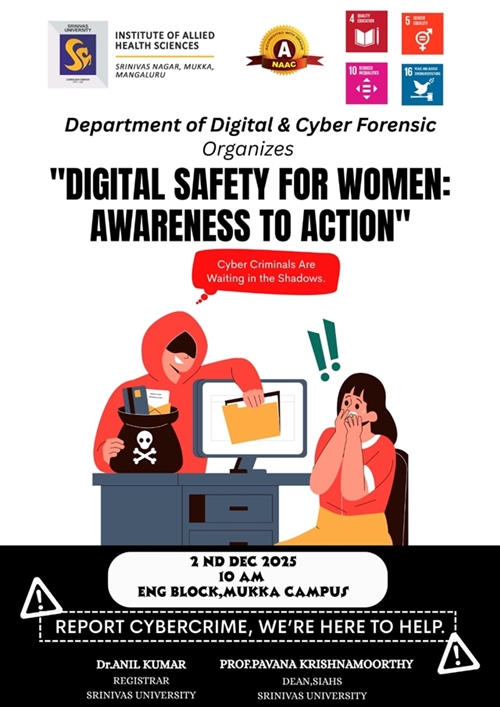
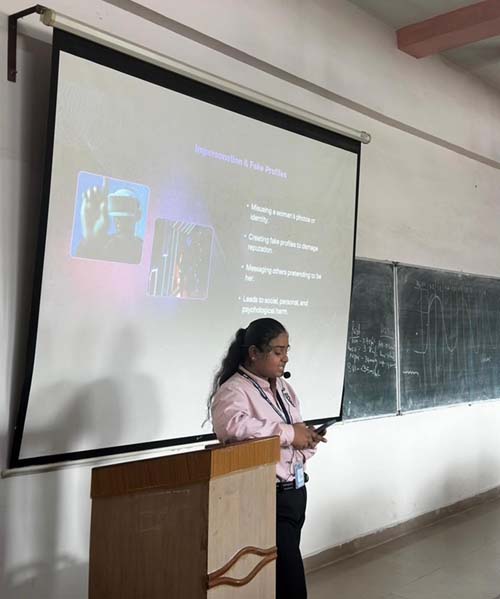
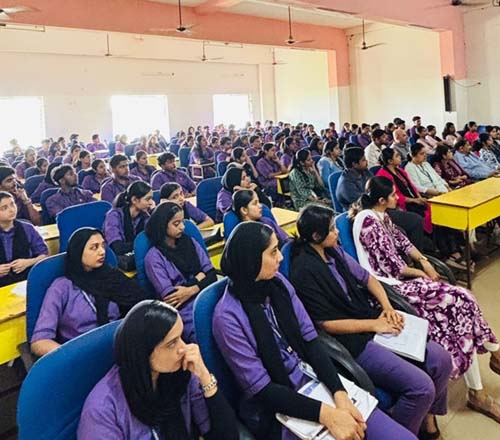
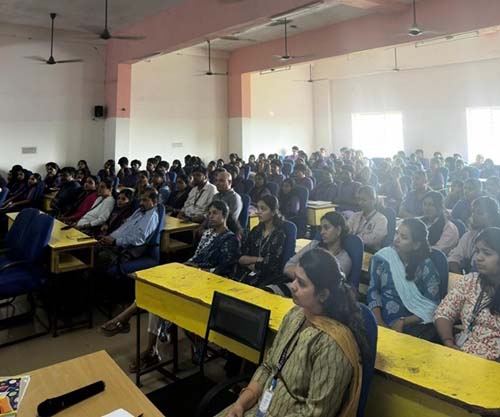
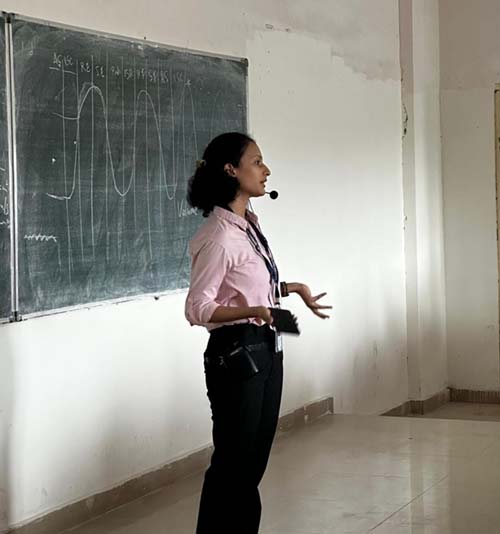
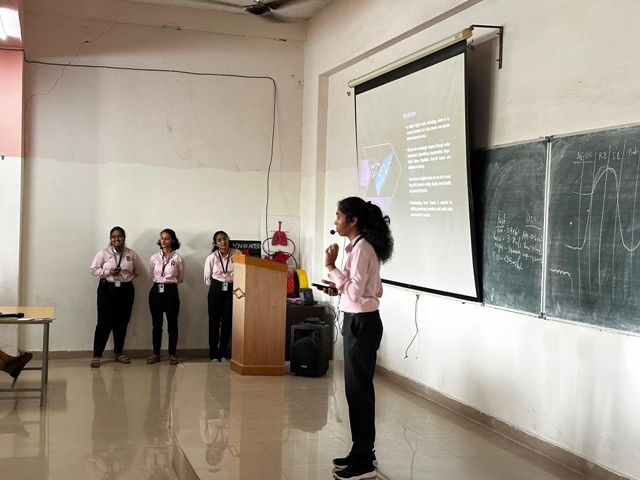
This programme serves as a platform to educate women on the evolving cyber risk landscape and to promote actionable steps for personal and community digital safety.
II. Objectives of the Programme
The session aligns with the academic and practical objectives seen in prior cybersecurity training programs, adapted for women-centric online safety needs. The key objectives include:
• To create awareness about common cybercrimes affecting women, such as online harassment, privacy breaches, stalking, impersonation, and financial fraud.
• To equip participants with practical knowledge of cybersecurity tools, safe browsing habits, privacy settings, and digital hygiene practices.
• To teach women how to identify threats, including phishing, malware, social engineering, and unauthorized access attempts.
• To encourage active reporting of cybercrime and provide guidance on legal support mechanisms and redressal platforms.
• To promote confidence and self-protection, enabling women to safely navigate social media, digital communication platforms, and online transactions.
These objectives draw inspiration from the practical, skill-building learning approach used in previous cybersecurity workshops, which emphasized awareness, tools, investigation methods, and real-world threat modelling.
III. Highlights of the Programme
Building on the educational style of previous sessions at the university, this event will focus on:
• Understanding how cybercriminals target women, including emotional manipulation, data theft, and privacy invasion.
• Demonstrating real-world cases where attackers exploit vulnerabilities similar to hands-on threat simulations conducted in earlier cybersecurity training programs.
• Providing participants with step-by-step methods to secure their digital identity, devices, and online profiles.
• Raising awareness about safe digital behaviour and the psychological tactics used by online predators.
IV. Key Activities & Sessions
The content is adapted directly from the training structure in the reference document and translated into women-focused safety topics:
1. Understanding cyber threats for Women
Exploring common attacks such as:
• Social media hacking
• Cyberstalking
• OTP & UPI fraud
• Image misuse & morphing
• Fake profiles
• Phishing and malicious links
2. Safe Digital Practices & Privacy Settings
Inspired by practical demonstrations from earlier programs, this session will teach:
• How to set secure passwords & enable multi-factor authentication
• Safe social media settings
• How to avoid malicious downloads
• Recognizing suspicious messages & connections
3. Real-Time Demonstrations
Following the model of hands-on demos (e.g., malware analysis, investigations) from the reference PDF, simplified demonstrations will show:
• How attackers steal information
• How data leaks happen
• How to detect unsafe apps/websites
4. Responding to Cybercrime
Participants will learn:
• How to preserve evidence
• How to report to cyber police
• How to use 1930 helpline, cybercrime.gov.in, and local support structures
• Legal protections for women under IT Act & IPC
5. Interactive Q&A Session
An open space for women to share concerns, ask questions, and clarify doubts with cybersecurity experts.
V. Outcome of the Programme
Following the outcome style of prior cyber-training workshops:
• Participants will gain confidence in managing their digital presence.
• Women will be able to identify cyber threats early and take preventive actions.
• They will acquire practical skills to secure devices, accounts, and personal data.
• The session aims to encourage immediate reporting of cybercrime and reduce stigma or hesitation among women, similar to how previous workshops bridged academic learning with real-world skills.
VI. SDG Alignment
This event supports multiple UN Sustainable Development Goals, similar to the linkages highlighted in previous cybersecurity programmes:
SDG 4: Quality Education
Promoting digital literacy and safety education for women.
SDG 5: Gender Equality
Empowering women with the knowledge to protect themselves in digital spaces, preventing gender-based cyber violence.
SDG 10: Reduced Inequalities
Ensuring equal access to cybersecurity awareness for vulnerable groups.
SDG 16: Peace, Justice & Strong Institutions
Encouraging cybercrime reporting and strengthening trust in justice and institutional support systems.
“Digital Safety for Women: Awareness to Action” aims to create a safer digital environment by equipping women with essential cybersecurity skills.
Drawing inspiration from the university’s prior cybersecurity initiatives, this programme emphasises awareness, prevention, action, and empowerment.
The event will play a crucial role in not only educating women but also motivating them to take control of their digital safety and stand strong against evolving cyber threats.