Daijiworld Media Network - Mumbai
Mumbai, Dec 24: Scientists have achieved a major breakthrough in understanding how a human embryo implants in the uterus by recreating a highly primitive, womb-like environment in the laboratory. The findings, published on Tuesday in three separate papers in the journals Cell and Cell Stem Cell, could open new avenues to address infertility and recurrent miscarriages, while also triggering serious ethical debates.
Researchers say the study provides an unprecedented view into one of the most critical yet least understood stages of pregnancy — implantation, when a microscopic embryo embeds itself into the uterine lining. Until now, this process has remained largely a mystery as it occurs deep inside the body, beyond direct observation.
“This is really important work that moves embryo research forward and could help explain what makes a pregnancy healthy,” said Insoo Hyun, a bioethicist at The Hastings Center, who was not involved in the research. However, he cautioned that the technology could potentially be misused in the future.
One of the ethical concerns highlighted by experts is the distant possibility of ectogenesis — a process where embryos could develop outside the human body in artificial environments. “That is very troubling,” said Ana Iltis, a bioethicist at Wake Forest University, stressing that such developments raise profound moral and social questions.
Scientists involved in the study, however, emphasised that such scenarios remain theoretical and far removed from the current research goals. “This is very exciting,” said Jun Wu, a molecular biologist at the University of Texas Southwestern Medical Center and a key contributor to the study. “Our focus is understanding early human development and why pregnancies sometimes fail.”
Wu described human implantation as a “black box” in medical science. “It happens very early in pregnancy, and we don’t know exactly when or where. We have never been able to observe it directly,” he said.
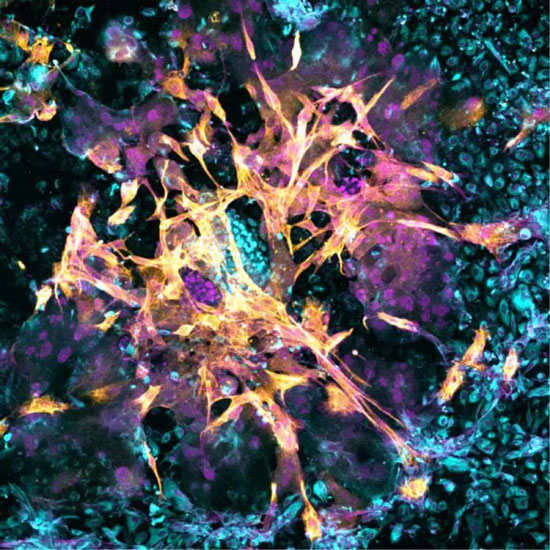
To overcome this, researchers in China collected uterine lining tissue obtained during routine medical procedures and successfully recreated a functional model of the womb lining inside tiny lab devices. This allowed them to observe how early embryos interact with the uterine environment.
Experts believe the findings could provide critical insights into why many pregnancies fail at an early stage and may eventually help doctors develop better treatments for infertility and miscarriage.
While the scientific community has welcomed the breakthrough, bioethicists insist that clear ethical boundaries must guide future research to ensure such technologies are used responsibly.