Daijiworld Media Network - New Delhi
New Delhi, Dec 19: Prime Minister Narendra Modi on Friday stressed the importance of traditional medicine in addressing global health challenges arising from imbalances in life, gut health, sleep, and workplace stress. Speaking at the closing ceremony of the second WHO Global Summit on Traditional Medicine at Bharat Mandapam, PM Modi highlighted India’s leadership in promoting a science-based and people-centred traditional medicine agenda.
The three-day Summit, held from December 17 to 19, was jointly organised by the World Health Organisation (WHO) and the Ministry of Ayush, with the theme “Restoring balance: The science and practice of health and well-being.” Emphasising Ayurveda’s focus on equilibrium, the Prime Minister noted, “In Ayurveda, balance, that is, equilibrium, has been called the synonym of health. The one whose body maintains this balance is healthy.”
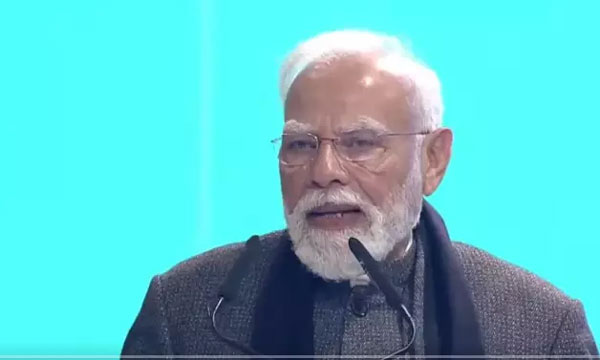
He pointed out that modern lifestyles, technological advancements, and reduced physical activity are creating unprecedented health challenges. “Restoring balance is a global urgency,” PM Modi said, stressing that traditional healthcare must address not only present needs but also future health scenarios.
On the safety and evidence of traditional medicine, he highlighted India’s research efforts, citing Ashwagandha as an example. “During Covid-19, its global demand surged, and its use spread to many countries. India is promoting Ashwagandha with authentic research and evidence-based validation,” he added.
The Summit served as a platform for convergence between traditional and modern medicine, fostering innovation. Several initiatives were launched to empower the Ayush sector, including the My Ayush Integrated Services Portal (MAISP), a master digital portal, and the Ayush Mark, designed as a global benchmark for quality. PM Modi also released a commemorative postal stamp on Ashwagandha, symbolising the worldwide recognition of India’s medicinal heritage.
Further, the Prime Minister inaugurated the new WHO-South East Asia Regional Office complex in Delhi, describing it as a “humble gift from India,” reflecting the nation’s commitment to global health collaboration.
PM Modi concluded by urging greater research, use of digital technologies, and creation of internationally trusted regulatory frameworks to advance traditional medicine and holistic health practices worldwide.