Pics: Nayana J C
Daijiworld Media Network – Mangaluru (NJC)
Mangaluru, Nov 27: The Dakshina Kannada district administration and District Disaster Management Authority (DDMA) conducted a large-scale off-site aircraft crash mock exercise on Friday, November 27, to evaluate emergency preparedness, inter-agency coordination and rescue capabilities in the event of an aviation disaster.
The exercise simulated an aircraft crash involving an Airbus A321 carrying 117 people, including 111 passengers and six crew members, near the Gurpur River, outside the airport premises, at 10.20 am.
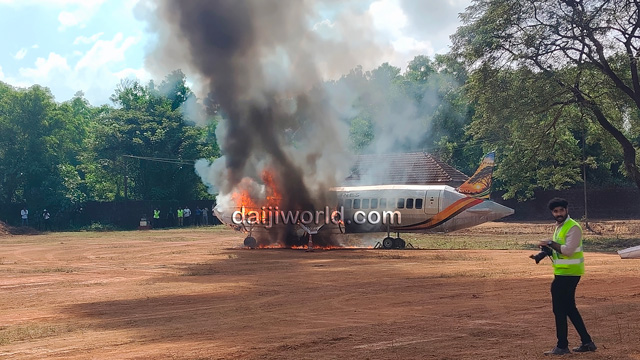
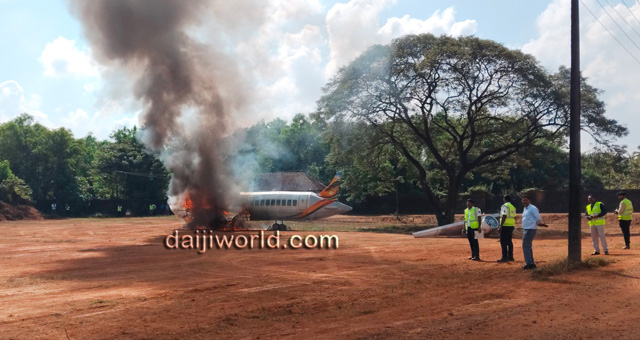
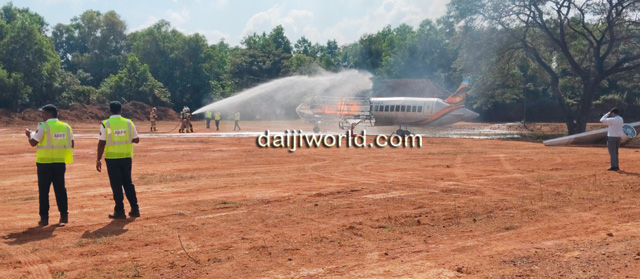
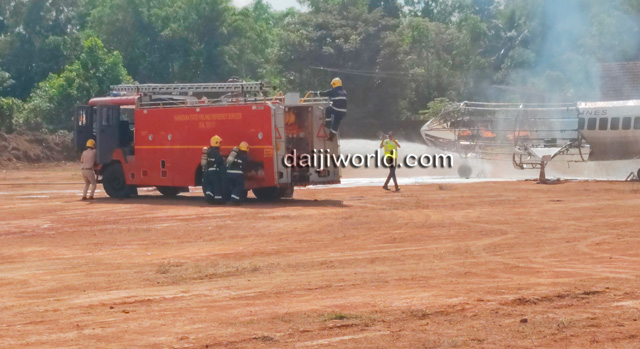
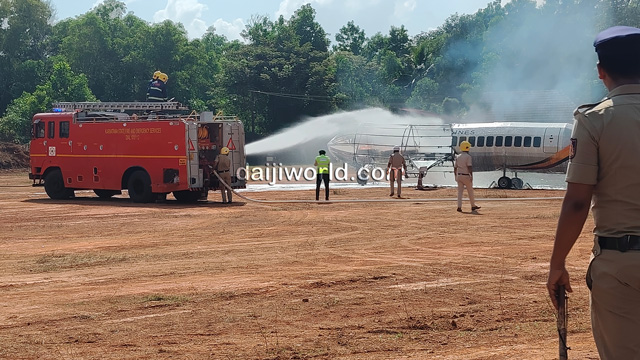
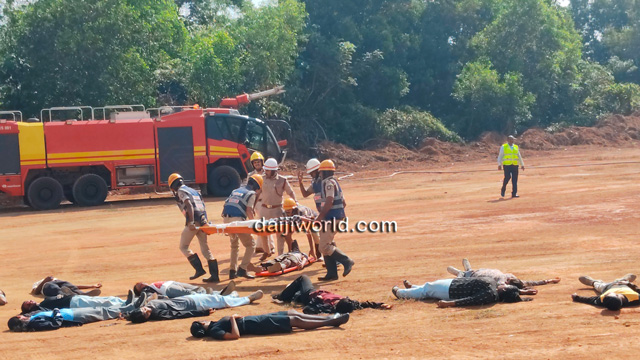
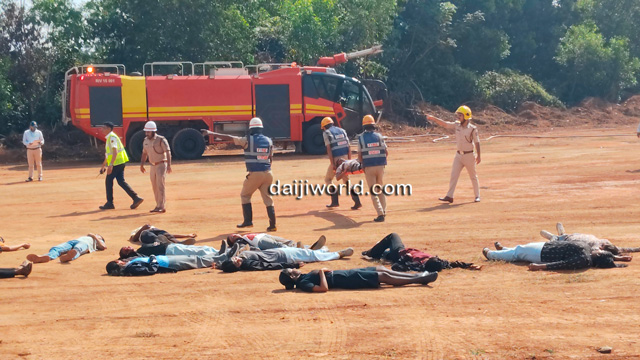
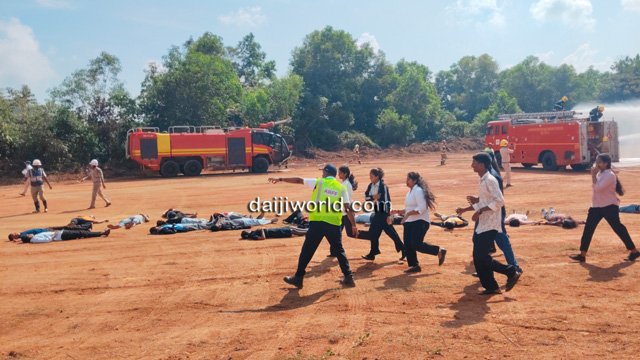
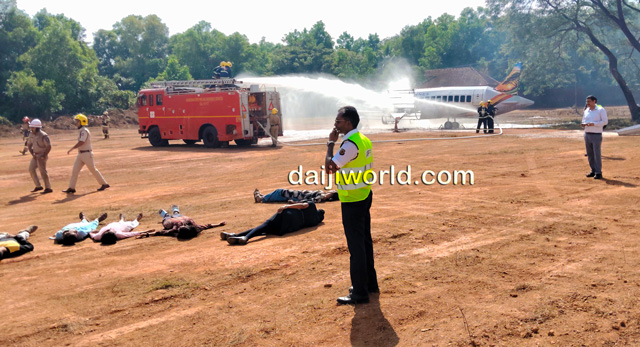
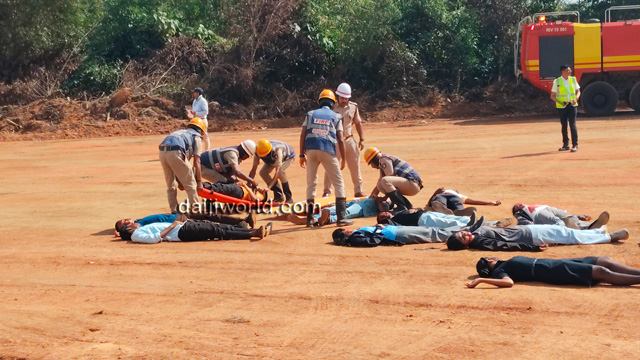
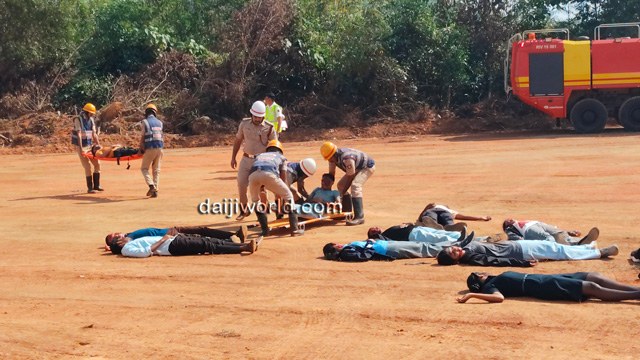
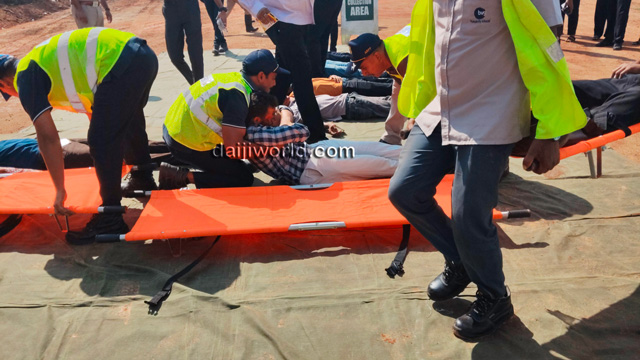
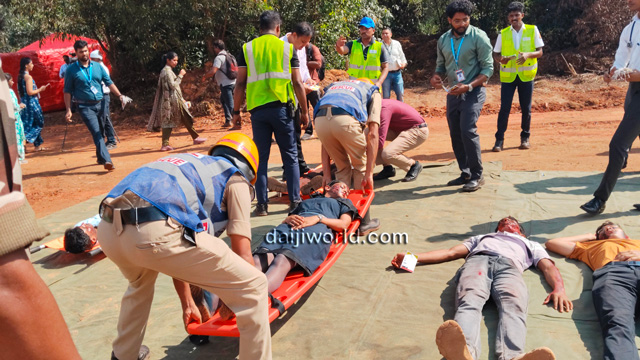
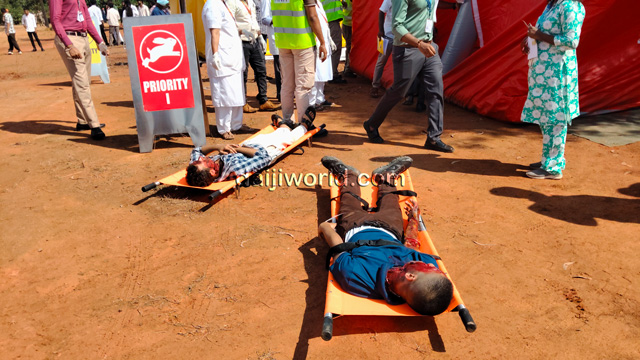
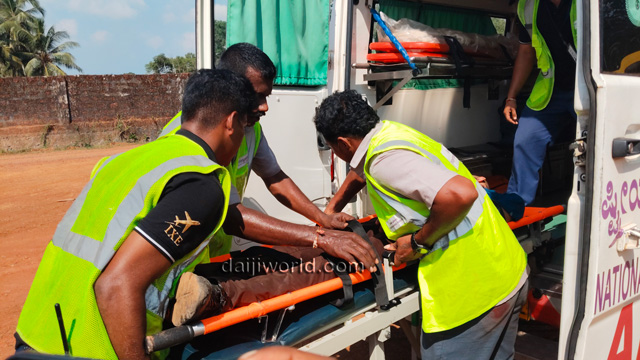
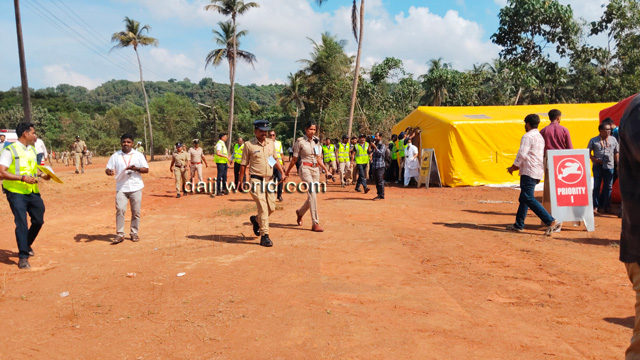
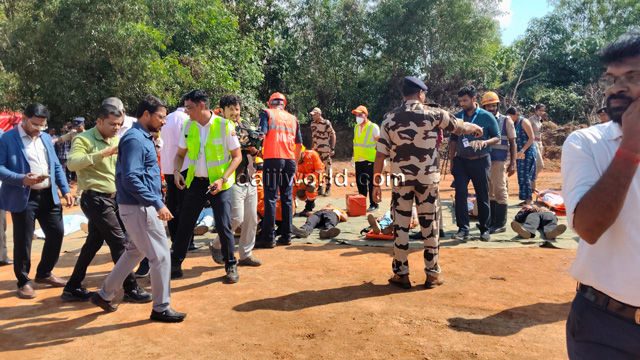
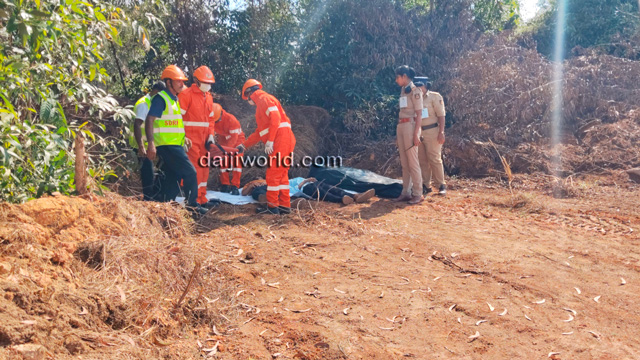
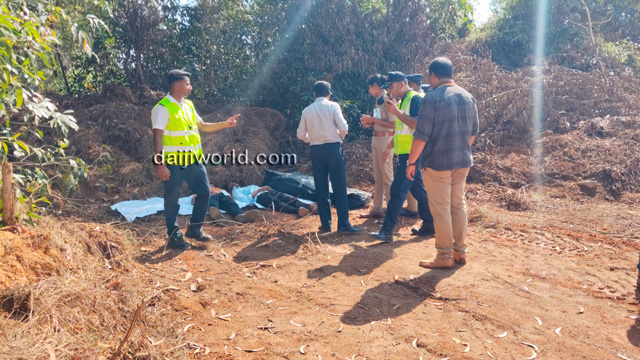
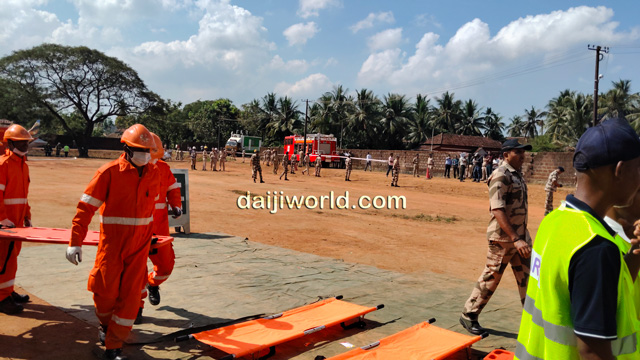
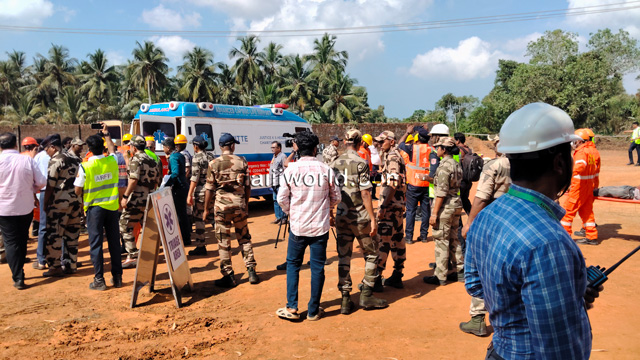
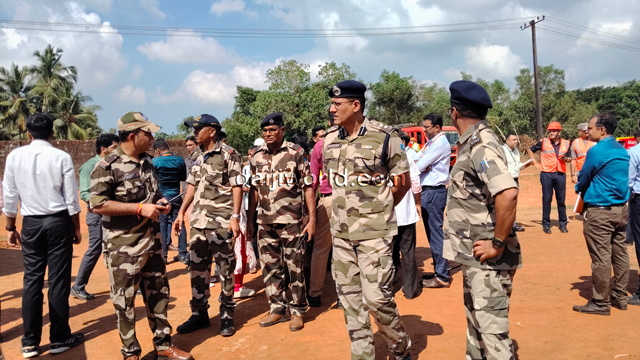
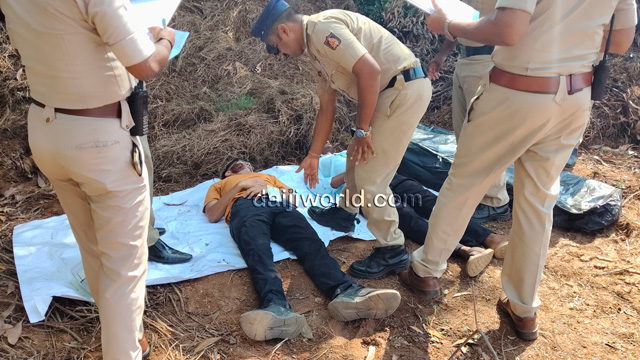
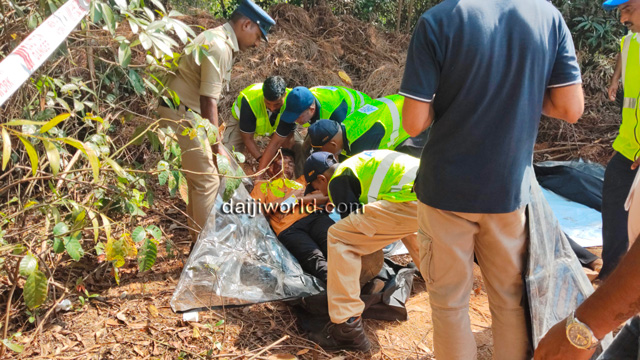
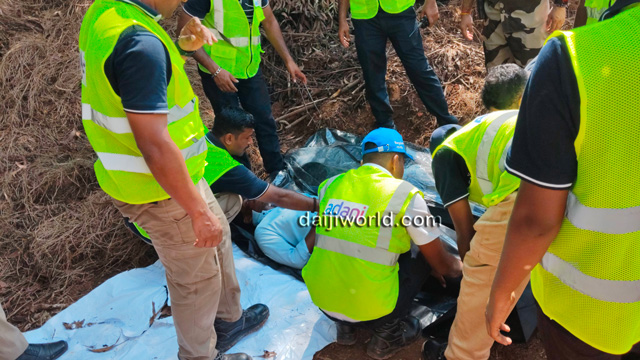
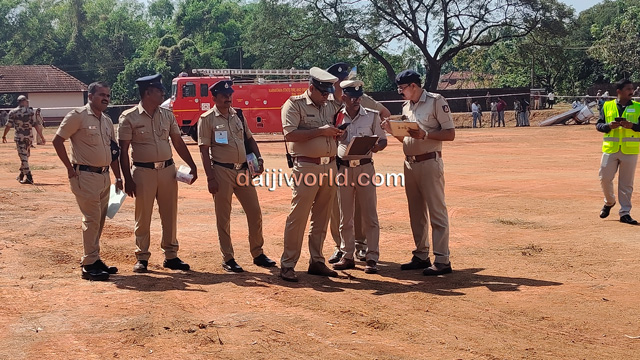
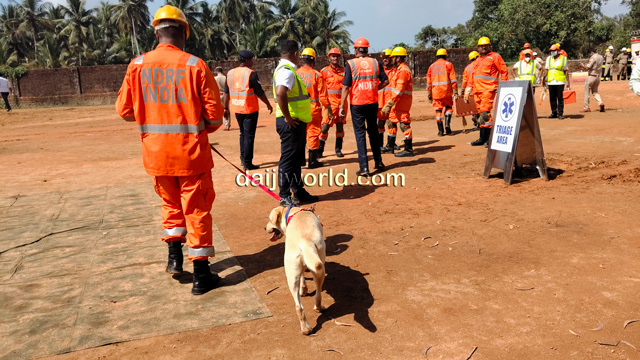
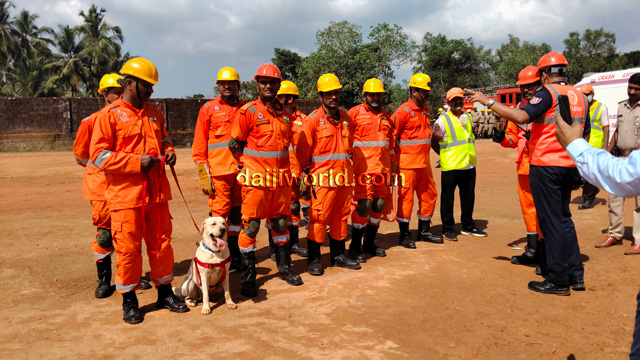
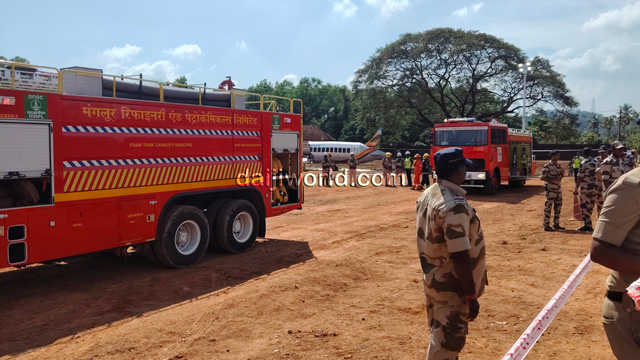
Following the simulated crash, the airport authorities alerted the district administration, triggering the District Off-site Emergency Plan. Shrinivas, assistant commissioner of the Mangaluru Sub-Division, was designated as the incident commander by the deputy commissioner and took charge of coordinating rescue and relief operations at the site.
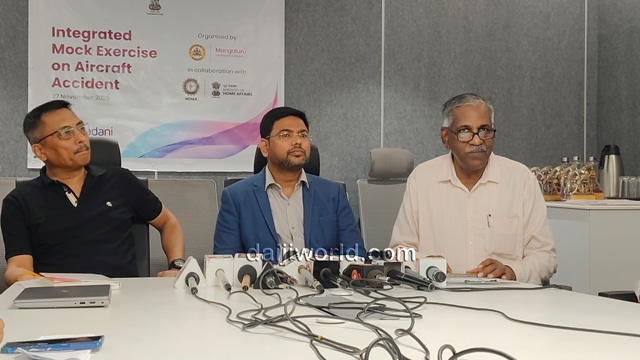
Explaining the sequence of events during the media briefing, Dr K V Kethan, former professor at NITK and member of the District Disaster Management Authority, Dakshina Kannada, said the exercise was designed to test the preparedness of various agencies and assess their ability to respond effectively to a major aviation emergency.
According to the simulated timeline, the airport declared an emergency at 10.22 am, while its internal emergency protocols were initiated at 10.30 am. The district administration was alerted at 10.31 am, following which ambulances were dispatched at 10.37 am. A relief camp was established by 10.44 am, and the aircraft's black box was located and handed over to Directorate General of Civil Aviation (DGCA) officials by 10.56 am.
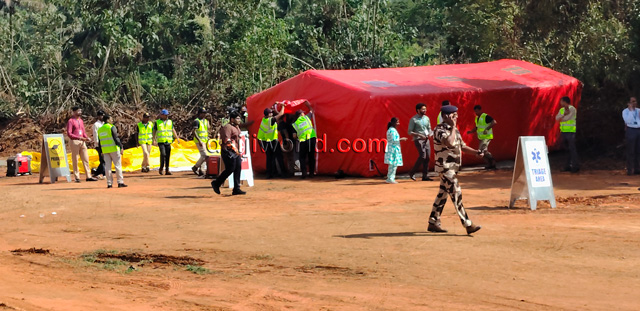
At the crash site, three major operational zones were established — an Incident Command Post, a staging area for rescue equipment and ambulances, and a medical post for treating injured victims. Officials from the Police, Fire and Emergency Services, Revenue, Health, Pollution Control and Animal Husbandry departments coordinated their operations under the supervision of the Incident Commander.
As part of the casualty simulation, 42 people, including 39 passengers and three crew members, were categorised as critically injured under the Red category. Another 21 were placed under the Yellow category, requiring urgent medical attention, while 45 were classified under the Green category, with minor injuries. Nine fatalities were also simulated, with seven bodies recovered from the crash site and two passengers presumed drowned in the Gurpur River after jumping out of the aircraft in panic.
Medical teams from Wenlock District Hospital, A J Hospital and Father Muller Hospital participated in the exercise. A temporary relief centre and mortuary were established at Srinivas Medical College and Hospital, while the police facilitated a green corridor for the swift movement of ambulances to designated hospitals.
The exercise involved around 120 police personnel, 80 airport personnel, 60 Fire and Emergency Services personnel, 30 National Disaster Response Force (NDRF) personnel and 25 State Disaster Response Force (SDRF) personnel, besides medical teams and volunteers. Fire tenders from MRPL, HPCL, NMPA and MSEZ also extended support.
NDRF personnel deployed rescue boats to search the Gurpur river. MESCOM officials simulated the disconnection of electricity supply to prevent secondary hazards. The Karnataka State Pollution Control Board collected water samples to assess possible contamination from aviation fuel, while Animal Husbandry Department officials assessed the potential impact on livestock in the surrounding areas.
During the interaction with the media, officials emphasised that saving lives would remain the foremost priority during an actual aircraft crash. Airport authorities and airline personnel would be the first responders, followed by the district administration, police and Fire Services.
Responding to questions about the simulated fatalities, Dr Kethan referred to the 2010 Mangaluru air crash and explained the importance of preparing agencies to handle severe burns, mass casualties and the challenges involved in managing deceased victims and grieving families. The assistant commissioner also highlighted the need to train officials in handling relatives and maintaining order during such emergencies.
Officials clarified that trained National Service Scheme (NSS) volunteers, rather than members of the general public, were involved in the exercise. They explained that untrained civilians are restricted from entering crash sites, as improper handling of injured persons could worsen their injuries and interfere with professional rescue operations.
The exercise was observed by Brig Ravinder Singh Bora and Brig Kishan Singh Mehra, representatives of the National Disaster Management Authority (NDMA), government of India, New Delhi. They observed the response mechanisms and coordination among the participating agencies as part of the assessment of disaster management preparedness.
Officials said this was the district's fourth off-site mock exercise, following earlier exercises at MCF/NMPA, BASF and MRPL, and the first simulated aircraft crash exercise of its kind in the southern region. Independent observers also assessed response times, casualty triage and field-level coordination to identify gaps and suggest improvements.
The exercise is expected to help strengthen the District Disaster Management Plan and enhance the preparedness of various agencies to respond effectively to large-scale aviation emergencies.