Daijiworld Media Network - Bhopal
Bhopal, Nov 20: Union Agriculture Minister Shivraj Singh Chouhan on Friday launched India's first indigenous vaccine against H5N1 bird flu, developed by scientists at the National Institute of High Security Animal Diseases (NIHSAD) in Bhopal.
The institute functions under the Indian Council of Agricultural Research (ICAR). Chouhan described the vaccine as the world's first against this particular variant of bird flu, saying it would strengthen the country's efforts to tackle recurring outbreaks that have caused heavy losses to the poultry industry and affected farmers' livelihoods.
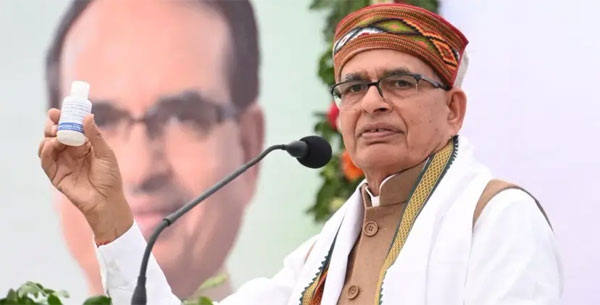
Dedicating the vaccine to the nation, Chouhan said it would cost just Rs 1 to Rs 2 per dose, making it affordable even for small poultry farmers. "Animals are moving ATMs for farmers, providing them with a regular source of income," he said.
India has reported more than 500 bird flu outbreaks since 2006, when the first outbreak was detected in Navapur, Maharashtra. Around 10 lakh chickens died during that outbreak, while several others were culled to contain the infection.
Chouhan said around nine lakh chickens died during an outbreak in 2021, while another two lakh died this year. He warned that recurring outbreaks not only cause substantial financial losses to poultry farmers but also carry the potential risk of transmission to mammals and humans.
The Minister also announced that a state-of-the-art laboratory would be established in Bhopal at a cost of Rs 300 crore. He said he chose Bhopal for the vaccine launch instead of Delhi to ensure that the scientists involved in its development could attend the programme.
Highlighting the wider economic impact of animal diseases, Chouhan said livestock-related illnesses caused estimated annual losses of around Rs 56,000 crore. These included Rs 22,000 crore due to foot-and-mouth disease, Rs 20,000 crore from lumpy skin disease, Rs 9,212 crore from brucellosis and Rs 4,683 crore from Peste des Petits Ruminants (PPR).
He said the Centre had been implementing vaccination programmes to control animal diseases. Under the National Animal Disease Control Programme, launched by Prime Minister Narendra Modi from Mathura, 147.16 crore free doses had been administered against foot-and-mouth disease.
The Minister also referred to indigenous vaccines developed against lumpy skin disease, classical swine fever and African swine fever.
Praising the scientists behind the H5N1 vaccine, Chouhan said they had worked for months without taking weekend holidays and adhered to stringent laboratory biosafety protocols.
"Our scientists have once again demonstrated India's scientific capabilities. Those who go abroad and question the country's institutions and scientists should see the achievements of today's self-reliant India," he said.
Eight scientists, including Dr S. Nagarajan, Dr Manoj Kumar and Dr Aniket Sanyal, were acknowledged for their contributions to the research.