Daijiworld Media Network – Bengaluru
Bengaluru, Nov 20: Having a social media account does not give anyone the unrestricted freedom to post whatever they wish, the Karnataka High Court has warned, while refusing to quash two criminal cases registered over allegedly defamatory, abusive and threatening social media posts.
Making a strong observation on the responsible use of social media, the court emphasised that freedom of speech and expression is not absolute and remains subject to constitutional restrictions. Merely having an online account cannot be treated as a licence to publish offensive, threatening or defamatory content.
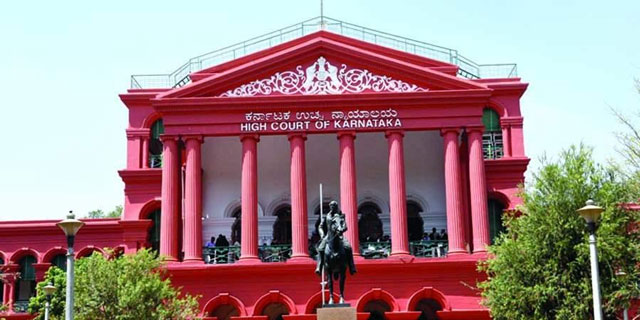
The two cases were registered against Shubha and Mohan on April 24, 2025, based on complaints filed by Tanush M Shetty, 24, a resident of Ujire in Beltangady taluk of Dakshina Kannada district.
According to the complaints, the accused allegedly used a photograph of Shetty receiving treatment in a hospital bed on Instagram and accompanied it with obscene and threatening messages.
The complainant further alleged that morphed photographs of him were circulated along with false claims that he belonged to the Christian community, allegedly with the intention of spreading communal hatred.
The complaints also referred to a series of alleged false and defamatory social media posts accusing Shetty of involvement in rape, forced abortion, offences under the Protection of Children from Sexual Offences (POCSO) Act, insulting Hindu temples and the Sowjanya murder case.
Following the registration of the two cases under Sections 353(2) and 62 of the Bharatiya Nyaya Sanhita (BNS), Shubha and Mohan approached the Karnataka High Court seeking to have the criminal proceedings against them quashed.
Hearing the petitions, a single-judge Bench headed by Justice Suraj Govindaraj observed that the complainant's allegations did not appear to be false on the face of the record and warranted a detailed investigation.
The court noted that police investigations had been stalled following an interim stay order granted earlier by the High Court. Given the seriousness of the allegations, it held that a proper investigation was necessary to establish the facts and ascertain their veracity.
Dismissing the petitions, the court issued a clear warning against treating social media platforms as spaces where users could publish anything without accountability.
"Just because one has an account on social media, it does not mean that one has been given a free licence to post whatever one wishes. Freedom of speech is subject to constitutional restrictions," the court observed.
The ruling underscores the limits of online expression and the need for social media users to exercise responsibility while posting content, particularly when it concerns the reputation and dignity of others.