Daijiworld Media Network - Jerusalem
Jerusalem, Nov 4: Israel and Kazakhstan have signed a double taxation avoidance agreement after more than a decade of negotiations, marking a significant step towards strengthening bilateral investment and expanding economic cooperation.
The agreement was signed on Monday during the 10th meeting of the Israel-Kazakhstan Joint Economic Commission in Jerusalem. The meeting was co-chaired by Ze'ev Elkin, representing Israel's Finance Ministry, and Kazakhstan's Deputy Prime Minister Zhaslan Madiyev.
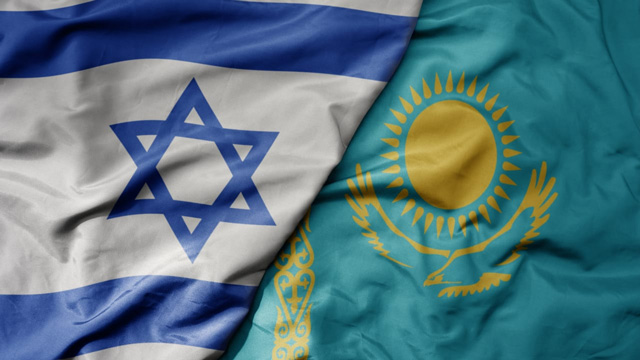
The two countries also signed memoranda of understanding covering artificial intelligence (AI), labour and cybersecurity, along with a joint declaration on space cooperation and the official protocol of the commission.
The meeting, organised by Israel's Foreign Ministry, brought together representatives from 12 government ministries, including nine Kazakh deputy ministers.
The discussions covered several areas of mutual interest, including energy, water technology, agriculture, innovation, investment, critical minerals, healthcare, scientific research and industrial standardisation. Both sides also explored cooperation in addressing climate change, desertification and water resource management.
The double taxation agreement is expected to simplify cross-border business activities by establishing clear taxation rights and reducing the possibility of the same income being taxed in both countries. However, the detailed provisions and implementation timeline have not yet been announced.
Welcoming the agreement, Elkin described it as an important achievement following years of negotiations and diplomatic engagement.
He said relations between the two countries had gained momentum over the past year, particularly following visits by senior leaders. He also expressed confidence that cooperation in artificial intelligence, innovation, agriculture, water management and energy would create fresh economic opportunities.
Madiyev's visit was described by the Israeli Foreign Ministry as the highest-level visit by a Kazakh official to Israel in a decade. He led a delegation of more than 50 senior government officials and representatives of state-owned companies.
During the visit, Madiyev held discussions with Israeli President Isaac Herzog, Foreign Minister Gideon Sa'ar and other senior government representatives to explore opportunities for stronger institutional and commercial partnerships.
The two countries also established their first joint working group on water management, led by the Israel Water Authority. The initiative follows discussions during Sa'ar's visit to Kazakhstan in January.
Kazakhstan has identified efficient water management as a priority, particularly in agriculture and infrastructure. Israel's experience in irrigation technology, water monitoring and reducing water losses is expected to offer opportunities for cooperation.
Meanwhile, a bilateral business forum organised by the Israeli Foreign Ministry and Israel Export Institute, in cooperation with the Israel Innovation Authority and the Manufacturers Association of Israel, brought together companies and government representatives from both countries.
Discussions focused on investment opportunities in advanced technology, infrastructure, critical minerals, cybersecurity and industrial development. Kazakhstan also reported that seven commercial documents were signed during the forum.
The visit further highlighted Kazakhstan's growing economic and diplomatic engagement with Israel following its accession to the Abraham Accords in November 2025.
The development has opened additional opportunities for cooperation between Israel and Central Asian markets. Kazakhstan, the region's largest economy, is particularly significant for its natural resources, including uranium, copper, zinc, tungsten and lithium.
Its position connecting Europe and Asia also offers opportunities in international trade, logistics and industrial supply chains.
Analysts have highlighted the potential for combining Kazakhstan's mineral resources and industrial capabilities with Israel's expertise in technology, agriculture, water management and cybersecurity.
The latest agreements are expected to provide a broader framework for cooperation, although their long-term impact will depend on the implementation of concrete projects, investments and commercial partnerships.
Kazakhstan's Deputy Prime Minister Madiyev emphasised that cooperation should go beyond diplomatic discussions and signed documents to produce practical outcomes, including investments, technology transfers and projects that can be implemented in Kazakhstan.