Daijiworld Media Network - Jammu and Kashmir
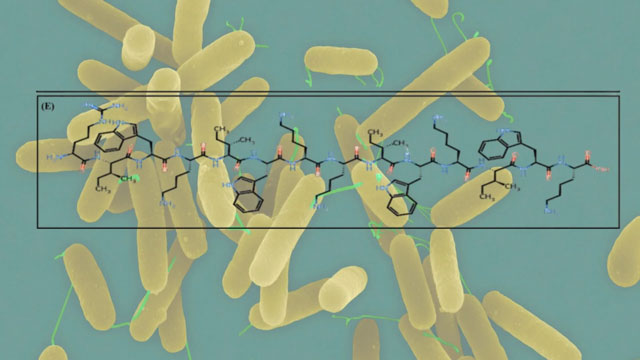
Jammu and Kashmir, Oct 31: Scientists have developed a synthetic antimicrobial peptide called RK-14 that has shown promising results in laboratory tests against drug-resistant bacteria, including methicillin-resistant Staphylococcus aureus (MRSA) and multidrug-resistant Escherichia coli strains isolated from poultry.
The artificially designed molecule has also demonstrated the ability to break down mature bacterial biofilms, which are protective layers that allow bacteria to survive on medical devices such as urinary catheters and contribute to persistent hospital-acquired infections.
The development could offer a potential new approach to tackling antimicrobial resistance (AMR), which has emerged as a major global public health challenge. The growing ability of bacteria to withstand existing antibiotics has made several infections increasingly difficult to treat.
Biofilms pose an additional challenge because bacteria living within these protective structures can become significantly more tolerant to antimicrobial treatments than free-floating bacterial cells.
To develop RK-14, researchers used an integrated design approach involving artificial intelligence and machine learning. They generated and screened thousands of virtual peptide candidates, optimising properties such as electrical charge, hydrophobicity and structural stability before identifying RK-14 as the lead candidate for laboratory synthesis.
The researchers evaluated the peptide against drug-resistant bacterial strains by measuring its minimum inhibitory and bactericidal concentrations. They also tested its stability under different temperatures, salt conditions and blood serum concentrations, while examining its safety using human red blood cells and mammalian cell cultures.
Laboratory techniques, including fluorescence microscopy, flow cytometry and reverse transcription quantitative PCR, were used to study how the peptide interacts with bacterial cells and affects their biological processes.
RK-14 contains positively charged amino acids such as lysine and arginine, along with hydrophobic residues including tryptophan and isoleucine. This combination enables the molecule to attach to negatively charged bacterial cell membranes.
Once attached, the peptide penetrates the membrane, disrupting its structure and causing increased permeability, ultimately leading to bacterial cell damage and death.
The study also found that RK-14 suppresses genes associated with quorum sensing, virulence and biofilm formation. These processes help bacteria communicate, cause infections and establish protective communities.
Unlike some naturally occurring antimicrobial peptides, which can face challenges involving stability, production costs, toxicity and degradation in blood serum, RK-14 demonstrated considerable thermal and salt stability under several tested conditions.
The peptide also showed a favourable safety profile at effective concentrations, with limited toxicity to mammalian cells. In tests involving medical-grade silicone catheter segments, it performed better than conventional antibiotics, including vancomycin and colistin, in clearing five-day-old mature biofilms.
However, the researchers identified certain limitations. Its ability to damage red blood cells increased at higher concentrations, while exposure to temperatures of 100 degrees Celsius reduced its activity. Prolonged exposure to high concentrations of blood serum also gradually weakened its effectiveness.
The researchers stressed that the findings are based on laboratory experiments and that further studies, including animal testing, long-term safety assessments and monitoring for the possible development of bacterial resistance, are necessary before the peptide can be considered for clinical use.
The findings highlight the potential of combining artificial intelligence with biological engineering to develop new antimicrobial treatments. If further research confirms its safety and effectiveness, RK-14 could eventually contribute to preventing drug-resistant infections and reducing bacterial biofilms on medical devices.