Daijiworld Media Network - New Delhi
New Delhi, Oct 22: With Delhi’s Air Quality Index (AQI) entering the ‘poor’ category, wearing a mask outdoors has become an important consideration for residents seeking to reduce their exposure to polluted air.
Fine particulate matter, particularly PM2.5, can penetrate deep into the lungs. Repeated exposure to polluted air can trigger coughing, throat irritation, wheezing and breathing difficulties, even among people without pre-existing medical conditions.
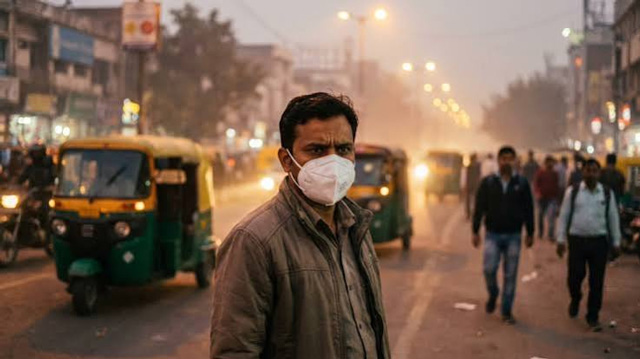
Dr Rahul Roshan, Director of the Centre for Chest and Respiratory Diseases at BLK-Max Hospital, explains that a properly fitted N95 or N99 mask can help reduce exposure to fine airborne particles. However, simply wearing a mask does not guarantee adequate protection if it does not fit the face correctly.
Fine particulate matter is a major concern during periods of poor air quality, as these tiny particles can travel deep into the respiratory system, aggravating existing lung conditions and contributing to inflammation. Prolonged exposure to air pollution is also associated with an increased risk of respiratory infections, asthma, chronic obstructive pulmonary disease (COPD), heart disease and stroke.
According to Dr Roshan, air pollution should not be dismissed as a seasonal inconvenience. Its effects can extend to otherwise healthy individuals, with the severity of symptoms depending on pollution levels, duration of exposure and individual susceptibility.
For effective protection, an N95 mask must cover both the nose and mouth and fit snugly against the face. Gaps around the nose, cheeks or chin can allow polluted air to enter without passing through the filter, reducing the mask’s effectiveness.
People should follow the manufacturer’s instructions while wearing and handling masks and ensure that the mask remains properly positioned throughout use. Cloth masks and scarves do not provide equivalent protection against fine particulate pollution.
Even when using a suitable mask, residents are advised to limit their time in heavily polluted areas and avoid unnecessary outdoor physical exertion. While a properly fitted N95 or N99 mask can reduce exposure to fine particles, it cannot eliminate all the health risks associated with poor air quality.