Daijiworld Media Network - Mumbai
Mumbai, Oct 22: A large study involving more than 461,000 US adults has found no significant association between overall ultra-processed food consumption and the risk of developing colorectal cancer, although certain food groups showed different patterns.
Published in the journal PLOS Medicine, the study analysed data from the NIH-AARP Diet and Health Study, which followed 461,682 adults aged 50 to 71 who enrolled in 1995 and 1996. Over a median follow-up period of 18.8 years, 10,075 participants developed colorectal adenocarcinoma, a type of cancer affecting the colon or rectum.
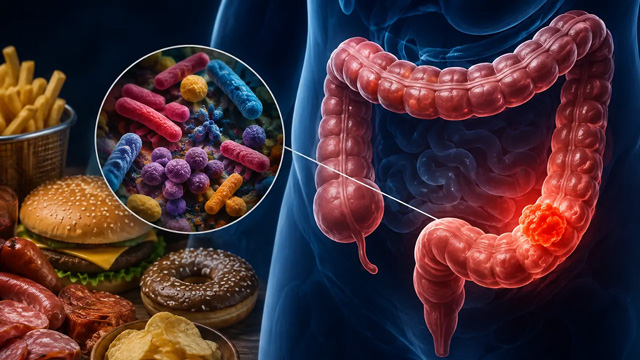
Ultra-processed foods accounted for a median of 43% of participants’ daily energy intake. However, researchers found no statistically significant difference in colorectal cancer incidence between those who consumed the highest and lowest amounts of these foods. The findings remained broadly similar after accounting for factors such as diet quality and body mass index.
When individual food categories were examined, different associations emerged. Participants with the highest intake of ultra-processed bread had a 9% lower incidence of colorectal cancer than those with the lowest intake. The corresponding figure was 16% for breakfast cereals, while frozen desserts and milk drinks were associated with an 18% lower incidence.
In contrast, participants who consumed the highest amounts of reconstituted meat and fish products had a 10% higher incidence of colorectal cancer than those in the lowest intake group.
The researchers cautioned that these findings do not establish that particular foods prevent or cause cancer, as the study was observational and cannot prove cause and effect. Associations identified across multiple food categories may also occur by chance.
The study further examined nutrients and food components from ultra-processed and non-ultra-processed sources. Higher intakes of whole grains and fibre from ultra-processed foods were associated with lower colorectal cancer incidence. Dairy and calcium were also associated with lower incidence, regardless of the level of food processing.
Higher meat intake, meanwhile, was associated with increased colorectal cancer incidence from both ultra-processed and non-ultra-processed sources.
Researchers also modelled the potential impact of replacing 10% of the grams of food consumed from ultra-processed sources with minimally processed foods. This substitution was associated with a 2% lower incidence of colorectal cancer, although the analysis does not prove that making such a dietary change would directly reduce an individual’s risk.
The study had several limitations. Participants reported their dietary habits at the beginning of the study, rather than throughout the follow-up period, and some foods may have been incorrectly classified according to their level of processing. The population also consisted mainly of older US adults, most of whom were white, limiting the extent to which the findings can be generalised to other populations.
Overall, the findings suggest that total ultra-processed food consumption alone may not fully explain patterns in colorectal cancer incidence. Researchers emphasised the need to examine individual food groups and their nutritional composition while recognising that observational studies cannot establish direct cause-and-effect relationships.