Daijiworld Media Network - Jaipur
Jaipur, Oct 22: There was a time when entrepreneur Rajat Agrawal faced the collapse of his business, bankruptcy and the loss of his family home. The factories he had built were struggling, and the future of his entrepreneurial ambitions appeared uncertain. Yet, instead of giving up, Agrawal rebuilt his business overseas and eventually transformed Gravita India into a global recycling company, demonstrating how setbacks can become turning points in an entrepreneur’s journey.
Agrawal, a mechanical engineering graduate from the Malaviya National Institute of Technology (MNIT), Jaipur, realised early in life that he wanted to build a business of his own rather than pursue a conventional career. His entrepreneurial journey began while he was still a student, when he persuaded his parents to provide Rs 1 lac to purchase agricultural land. He bought land on the Diggi-Malpura Road near Jaipur and began cultivating vegetables using scientific farming methods. He later expanded into dairy farming by purchasing Holstein cows.
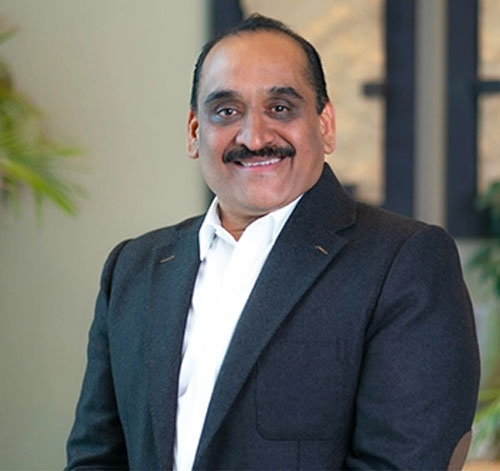
Although farming gave him his first experience of running a business, Agrawal eventually became interested in manufacturing and industrial operations. He worked as a stockist for engineering company Larsen & Toubro (L&T), an experience that strengthened his desire to establish a manufacturing enterprise.
His search for a suitable business opportunity led him to recycling. After exploring the market for used lubricating oil, tyres, automotive batteries and industrial paint, he identified lead recycling as a promising sector. India’s dependence on imported lead and the growing demand for lead-acid batteries offered an opportunity to build a business around recovering and reusing the metal.
Agrawal sold his farming and dairy businesses and entered the lead-recycling industry, laying the foundation for Gravita India in 1992. However, his early success was followed by severe setbacks. Changes in government regulations affecting hazardous-waste imports disrupted his business model, forcing him to shut down operations and lay off more than 100 employees.
He attempted to revive his fortunes through another venture involving liquid-lead recycling. However, a reduction in import duties made imported lead chemicals more competitive, undermining the economics of his business. The second venture also failed, leaving him bankrupt. His family home was sold by the bank to recover outstanding dues, while the factory he had built remained without buyers.
For many entrepreneurs, such a collapse could have marked the end of their ambitions. For Agrawal, it became the beginning of a different approach.
With his Indian business stalled, he moved to Singapore and joined a company dealing in scrap. Even while working there, he continued searching for opportunities to restart his entrepreneurial journey. His experience in lead recycling eventually led him to an opportunity to establish a battery-recycling unit in Sri Lanka.
The venture initially faced working-capital challenges. Agrawal approached strategic investors in India, who visited the facility and agreed to invest. With the necessary financial support, the business became profitable and provided him with a model for future expansion.
In 2005, Gravita expanded into Ethiopia, followed by operations in other African countries, including Madagascar, Namibia and Ghana. The overseas ventures helped rebuild his business and gave him the confidence to return to India. After resolving the issues associated with his earlier bankruptcy, he established a unit in Jaipur and expanded through acquisitions of recycling facilities in Jammu and Kashmir, Gujarat and Andhra Pradesh.
A major milestone came in 2010, when Gravita India entered the capital market through an initial public offering that raised Rs 45 crore. The issue was reportedly subscribed around 43 times, and the company was listed on the National Stock Exchange and the Bombay Stock Exchange.
Over the years, Gravita diversified beyond lead recycling into aluminium and plastic recycling, manufacturing and turnkey solutions for lead-processing plants. It also expanded its international presence and developed services connected with waste management and environmental compliance.
The company’s financial growth reflects the scale of this transformation. According to figures reported by Moneycontrol, Gravita India’s consolidated revenue increased from approximately Rs 1,349 crore in the financial year 2019-20 to nearly Rs 3,981 crore in 2024-25. Its net profit rose from around Rs 36.6 crore to approximately Rs 313 crore during the same period.
Gravita has continued to expand its recycling operations across international markets, positioning itself as an Indian multinational in the circular-economy sector. The company’s official website identifies Agrawal as its chairman and managing director.
Agrawal’s journey from failed ventures and bankruptcy to leading a publicly listed recycling enterprise highlights the importance of persistence, adaptability and learning from business setbacks. His experience also illustrates how a willingness to change direction, seek new markets and build strategic partnerships can help revive an entrepreneurial dream.
His story is not simply about building a large company from waste. It is about rebuilding after failure and recognising that the end of one business model need not mean the end of an entrepreneur’s ambitions.