Daijiworld Media Network - Washington
Washington, Oct 8: The Donald Trump administration has suspended several major technology and IT outsourcing companies, including Cognizant, Infosys, Tata, Wipro, HCL, Capgemini, Microsoft and Adobe, from the US Permanent Labour Certification (PERM) programme amid a wider crackdown on the country's immigration system.
US Labour Secretary Keith Sonderling announced the action alongside Vice President JD Vance and other officials involved in the administration's anti-fraud efforts.
The Department of Labour will not accept new PERM applications from the companies covered by the action or process their pending applications, Sonderling said.
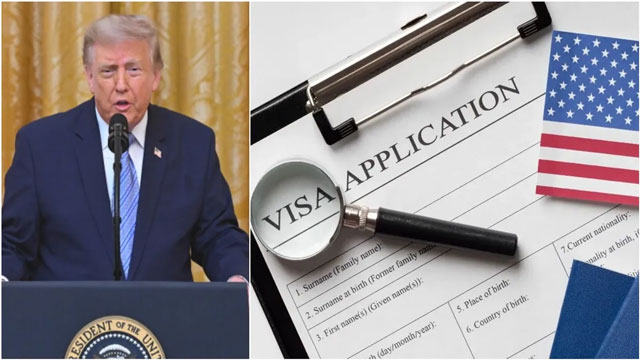
"I am hereby suspending from the Permanent Labour Certification Programme some of the largest IT outsourcing firms in the world, Cognizant, Infosys, Tata, Wipro, HCL, and Capgemini," Sonderling said, according to PTI. He separately announced the suspension of Microsoft and Adobe.
Sonderling alleged that the companies had made extensive use of foreign-worker programmes over the years. He said the companies had collectively requested almost three million foreign workers since 2009, received more than 230,000 H-1B visa approvals and obtained more than 100,000 permanent labour certifications.
Vance specifically criticised Microsoft, alleging that the company had laid off thousands of US workers while continuing to benefit from H-1B visas and employment-based green cards. He claimed Microsoft had laid off around 6,000 US workers while benefiting from 6,300 H-1B visas and nearly 3,000 green cards.
The administration has been increasing scrutiny of employers that rely heavily on foreign workers, arguing that some companies and outsourcing firms have used the H-1B system to replace or undercut American workers.
The PERM programme is administered by the US Department of Labour and forms an important part of the employment-based green card process for eligible foreign workers. Employers generally have to establish that there are not enough qualified, willing and available US workers for a position and that hiring a foreign worker will not adversely affect the wages and working conditions of similarly employed American workers.
After labour certification is approved, an employer can generally proceed with an immigrant petition before US Citizenship and Immigration Services, typically through Form I-140. A suspension can therefore prevent affected companies from filing new PERM applications and disrupt pending cases.
The action is particularly significant for Indian technology professionals because major Indian IT companies have long used US immigration programmes to place skilled employees in the American market.
The latest move follows an earlier action against Cognizant's PERM filings in September, when US authorities said they were investigating alleged fraud and possible harm to American workers. The expansion to other major IT companies indicates that scrutiny of foreign-worker hiring is widening.
The Trump administration has also introduced or extended measures targeting the H-1B system. In September, the White House said it would increase scrutiny of H-1B applications in cases where there is a heightened risk of American workers being laid off.
The latest PERM action comes a day after the Department of Homeland Security proposed a $70,000 fee for an F-1 international student's initial participation in the Optional Practical Training (OPT) programme. A subsequent OPT recommendation would attract a proposed $30,000 fee. The proposed fees would be paid by eligible educational institutions rather than directly by students.
OPT allows eligible international students to gain temporary work experience in the US in areas related to their studies. Students generally receive up to one year of OPT, while qualifying STEM graduates can receive an additional extension, allowing work authorisation for up to three years in total.
The DHS proposal is part of the administration's stated efforts to combat fraud and abuse in the OPT system and protect US workers. Meanwhile, nine US universities are reportedly under investigation over alleged misuse of visa-related programmes, adding to uncertainty for international students and foreign workers.