Daijiworld Media Network - Riyadh
Riyadh, Oct 3: Saudi Arabia is preparing a possible military offensive against Iran-backed Houthi forces in Yemen to reverse their recent gains and regain control of the strategic Bab el-Mandeb Strait, with Riyadh considering either a limited coastal assault or a broader multi-front operation, according to Reuters.
The operation could be launched in the coming weeks and would be led by Yemeni forces overseen by Riyadh, with Saudi air strikes providing support, according to six people familiar with the preparations cited by Reuters. More than 100,000 Yemeni troops could be mobilised depending on the scale of the offensive, although the timing remains uncertain, with estimates ranging from within a week to after the US midterm elections in early November.
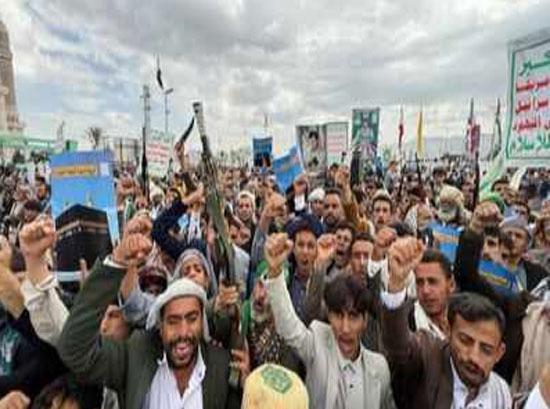
The immediate objective is to reverse the Houthis' rapid gains last month, when they advanced along Yemen's Red Sea coast and seized control of the Bab el-Mandeb area. The group had earlier captured the coastal town of Mocha and reached the strategic Perim island in the strait.
Bab el-Mandeb forms the southern gateway to the Red Sea and is a key shipping route connecting the Mediterranean and Asia. Its importance has increased amid the wider Iran conflict, with the Strait of Hormuz effectively closed, making the Red Sea route a crucial alternative.
The Saudi leadership is considering two options — a narrowly focused assault around Bab el-Mandeb or a broader offensive involving coordinated attacks on multiple fronts in the Al-Bayda, Marib, Taiz and Al-Jawf governorates, according to Gulf and Yemeni officials cited by Reuters.
Michael Ratney, a former US ambassador to Saudi Arabia, said he expected the operation to be more limited than the Saudi-led intervention in Yemen that began in 2015.
“Ideally, it would be a fairly limited operation to retake coastal areas and get back to normal maritime traffic,” Ratney said, according to Reuters.
His assessment suggests the immediate focus could remain on the Red Sea coast and reopening maritime traffic rather than attempting to defeat the Houthis across Yemen.
The main challenge for Riyadh is the condition of the Yemeni forces expected to lead the ground offensive. The forces comprise several factions armed and trained by Saudi Arabia and the UAE rather than a unified military, with the groups having competing political and territorial interests.
Yemen analyst Mohammed Albasha told Reuters that many anti-Houthi forces remained “not organised or prepared” for the sustained offensive required to push back the Houthis, who are applying pressure across several fronts.
The anti-Houthi camp was further fractured last winter when UAE-backed southern fighters clashed with Saudi-backed forces after attempting to seize territory in eastern Yemen.
Saudi political analyst Ali Shihabi, who is close to government thinking, also said the outcome would depend on the performance of the local forces, with the ground campaign shifting from defending positions to launching an offensive.
Saudi Arabia's allies are currently supporting Riyadh mainly through intelligence, equipment and defensive assistance rather than direct combat in Yemen.
The United States, Saudi Arabia's most powerful ally, is providing military advisers and intelligence, including targeting information for Saudi air operations, according to a Western diplomat cited by Reuters. However, Reuters reported that US President Donald Trump had previously rejected Saudi requests for direct military support, including air strikes.
Turkey and Pakistan have also provided military equipment that Saudi Arabia is using in Yemen, according to Pakistani and regional officials. Pakistan sent four cargo aircraft carrying air-defence systems, light artillery, drones and anti-drone equipment to Aden last month, while Pakistani military advisers are assisting their Saudi counterparts, officials said.
Pakistan has deployed between 30,000 and 40,000 troops inside Saudi Arabia for defensive duties, including border protection and missile and drone interception, but Islamabad has not committed troops to combat operations in Yemen.
Turkey has supplied military equipment, including drones that are being used over Yemen, while France has announced defensive systems and troops to protect Saudi Arabia's Red Sea port of Yanbu.
Saudi Arabia, Pakistan and Turkey signed the Mecca Joint Defence Agreement on August 7. The pact states that an armed attack on one of the three countries would be treated as an attack on all.
The military chiefs of the three countries met in Riyadh on September 25 to discuss the situation. Pakistan Foreign Minister Ishaq Dar said on Friday that the defence pact's members would hold an emergency meeting in Riyadh the following week.
Dar also said the meeting would consider Iran's suggestion of engaging the Houthis politically as an alternative to military action. He described the proposal as a goodwill suggestion rather than a formal offer.
Meanwhile, the renewed fighting has already worsened Yemen's humanitarian situation. The World Food Programme said 74 per cent of families in government-controlled areas were experiencing hunger amid intensified fighting, displacement and disrupted supply lines.