Daijiworld Media Network - New Delhi
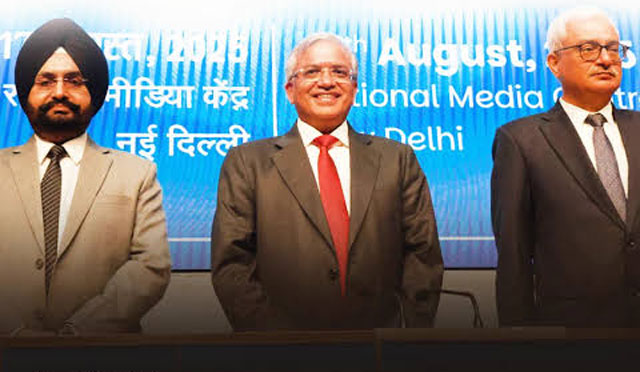
New Delhi, Sep 23: A severe internal division has emerged within the Election Commission of India (ECI) regarding the ongoing Special Intensive Revision (SIR) of electoral rolls, with two of the three election commissioners formally objecting to decisions implemented without their knowledge. Over the past 10 months, election commissioners Sukhbir Singh Sandhu and Vivek Joshi have raised objections on record at least 14 times, an investigation by The Indian Express has revealed.
The SIR, which commenced in Bihar in June 2025, has resulted in the deletion of more than 13 crore names from draft voter rolls across 30 states and Union Territories. The internal objections, often copied directly to chief election commissioner (CEC) Gyanesh Kumar, challenge the legality and transparency of how these revisions are being executed under his leadership.
The dissenting commissioners have raised alarms over four critical aspects of the ECI's operations. A major point of contention was the unauthorised alterations to Form 6, the standard application for new voters. A mandatory question was added asking if the applicant or their relatives existed in the "last SIR" electoral roll. Commissioner Joshi warned in May that altering this form required government rule amendments. Despite this, the change was implemented. In August, commissioner Sandhu formally recorded that the alteration was "unauthorised and illegal" and demanded its immediate removal.
The commissioners also warned against the gradual centralisation of the voter database. The integrity of the ECI's voter rolls has historically relied on a decentralised system controlled by local electoral registration officers (EROs). The two commissioners noted that the IT division, overseen by director general of IT Seema Khanna, has been restricting local EROs' access to the ERONet and ECINet portals. Sandhu explicitly flagged that the IT division lacks the legal authority to restrict the operational freedom of statutory authorities on the ground.
The SIR process in West Bengal also drew sharp criticism. Following Supreme Court intervention, judicial officers reviewed millions of voters flagged for "logical discrepancies." The ECI subsequently filed appeals before tribunals against voters whom these judicial officers had cleared for inclusion. Sandhu formally questioned who authorised these appeals, noting that neither the two ECs nor the West Bengal chief electoral officer were informed of the process or the basis for the filings.
The push towards software centralisation directly resulted in the disenfranchisement of eligible voters in Goa. Following a Supreme Court order, Goa's EROs cleared 97 individuals for inclusion in the final roll. However, the centralised software lacked a "rollback" feature to reverse previous deletions. Despite eight urgent requests sent to the senior deputy election commissioner and the DG of IT, the software was not updated in time, leaving the 97 eligible voters off the final list.
Under the Chief Election Commissioner and Other Election Commissioners Act of 2023, ECI business must be transacted unanimously or by a majority vote. The dissenting commissioners have consistently reminded senior officers that communications and directives are being issued in the name of the ECI without the requisite approval of "the commission" as a whole.
The rupture recently escalated when Joshi and Sandhu wrote separately to the cabinet secretary to strike down changes in work allocation that removed oversight of the IT backbone for the electoral rolls. Following this escalation, the CEC and the two ECs held their first full meeting in four months on September 9.