Daijiworld Media Network - Washington
Washington, Sep 6: The US military conflict with Iran could continue for another six months without a resolution and risks turning into another prolonged Middle East war, former US Defence Secretary Leon Panetta has warned.
Panetta said Washington and Tehran appeared locked in a stalemate, with neither side willing to negotiate, surrender or risk a wider confrontation.
“I think the likelihood is this war is going to continue for another six months without being resolved,” Panetta told The Guardian in an interview published on Sunday.
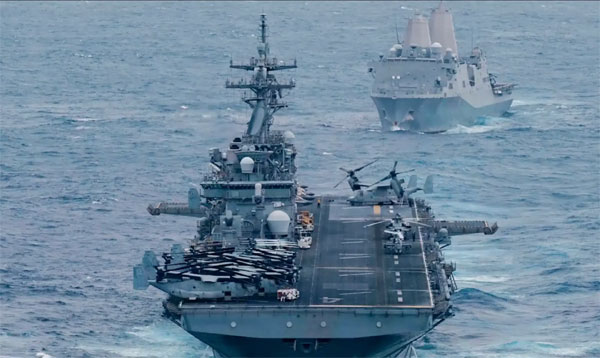
Panetta, who also served as CIA director under former President Barack Obama, said President Donald Trump had limited options to bring the conflict, which began more than six months ago, to an end.
He identified three possible courses of action. The first would be for Trump to halt the campaign and acknowledge that it had failed, which Panetta said was unlikely.
The second would involve continuing the current pattern of intermittent attacks, with the US and Iran exchanging strikes while seeking to avoid a broader war. Panetta said this could prolong the confrontation without producing a decisive outcome.
The third option, according to Panetta, would be for the US to take control of the Strait of Hormuz and prevent Iran from disrupting traffic through the strategically important waterway.
He said reopening the strait should be Washington's principal objective if the administration wanted to claim a clear military outcome.
Panetta also criticised Trump's repeated claims that an agreement was nearing and that the Strait of Hormuz remained open, saying such statements had damaged the President's credibility and weakened the impact of subsequent US warnings.
Vice President JD Vance said earlier this week that he would not describe the confrontation as a war. Asked whether it would end before the November midterm elections, Vance said he did not know and that the outcome depended on Iran.
Panetta also expressed concern over leadership changes and reported tensions within the Pentagon during an active military confrontation.
His remarks followed the resignation of Army Secretary Dan Driscoll amid reports of disagreements with Defence Secretary Pete Hegseth over personnel decisions.
Panetta said such tensions could create uncertainty among US service members and signal weakness to adversaries including China, Russia, North Korea and Iran.
The Pentagon rejected Panetta's assessment, saying the department was “firing on all cylinders” under Hegseth. Pentagon spokesperson Sean Parnell described claims that the department was in disarray as baseless.
Panetta also questioned whether the military was adequately supporting personnel on unusually long deployments. He cited the USS Abraham Lincoln, which arrived in Thailand after spending more than 260 days without a port visit while supporting operations against Iran.
His warning came after US forces struck three Iranian crude oil tankers on Saturday. US Central Command said the operation followed Iranian ballistic missile attacks targeting an American aircraft carrier and a guided-missile destroyer.