Daijiworld Media Network - New Delhi
New Delhi, Aug 24: Scientists under the Department of Science and Technology have made two advances in cancer research aimed at tackling two major challenges — detecting cancer stem-like cells that can cause recurrence and reducing the harmful effects of chemotherapy on healthy tissues.
In one study, researchers led by Dr Shubhasis Haldar at the SN Bose National Centre for Basic Sciences, in collaboration with Ashoka University, developed an artificial intelligence framework to identify rare cancer stem-like cells (CSCs) that can survive treatment and contribute to tumour recurrence and spread.
The study, published in NAR Cancer, focuses on CSCs that are difficult to detect because they are rare and can change their cellular identity. These cells are capable of self-renewal and can differentiate into multiple tumour lineages, placing them at the top of cellular hierarchies in several cancers.
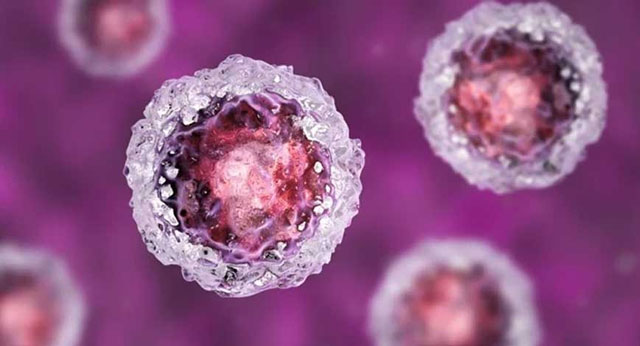
The researchers developed the AI-based Cancer Stem-like Cell Profiler and Neoplasm Deconvoluter, or ACSCeND, to identify three states of cancer stem-like cells within tumours — pluripotent-like, multipotent-like and unipotent-like.
ACSCeND combines information obtained from high-resolution single-cell sequencing with deep-learning techniques to analyse conventional bulk RNA sequencing data. This allows hidden stem-like cell populations to potentially be identified in large numbers of existing patient samples without requiring every sample to undergo single-cell sequencing.
The researchers tested ACSCeND against existing methods and found that it consistently performed better across independent datasets and different sequencing platforms. They subsequently used the framework to analyse more than 25,000 tumour samples from international cancer databases.
The analysis found that tumours containing higher levels of highly potent pluripotent-like cancer stem cells were associated with poorer survival, a greater risk of recurrence and reduced response to modern immunotherapies.
The AI framework also identified molecular programmes that could help these cells survive, adapt to changing conditions and evade the immune system.
Single-cell sequencing can provide detailed information by isolating individual cells from a tumour and analysing their RNA separately. However, the approach requires greater infrastructure and analytical resources.
By extracting hidden cancer stem-like cell states from conventional bulk RNA sequencing datasets, ACSCeND could potentially enable cancer profiling across much larger numbers of patient samples, including settings where single-cell sequencing facilities are limited.
In a separate study, researchers led by Dr Asis Bala of the Institute of Advanced Study in Science and Technology (IASST), Guwahati, and Dr KP Bhabak of IIT Guwahati developed a small-molecule compound designed to selectively release an anti-cancer agent inside malignant cells.
The compound, named RK-251, remains inactive outside cancer cells but becomes activated after entering a malignant cell.
The findings, published in the ACS Journal of Medicinal Chemistry, are based on metabolic differences between healthy and cancerous cells.
Cancer cells often contain higher concentrations of reactive oxygen species (ROS), unstable oxygen-containing molecules produced during cellular metabolism. When RK-251 enters a cancer cell, the higher ROS levels trigger a chemical reaction that releases NBDHEX, an anti-cancer compound.
NBDHEX targets proteins that cancer cells rely on for proliferation and treatment resistance, thereby helping inhibit their activity. Since non-malignant cells generally have lower ROS concentrations, the activation of RK-251 is expected to be considerably lower in healthy tissues.
Laboratory tests showed that RK-251 was effective against triple-negative breast cancer cells, a particularly difficult-to-treat form of breast cancer that lacks oestrogen and progesterone receptors as well as HER2.
The compound also showed lower toxicity towards non-cancerous cells. Tests conducted using zebrafish embryos found no observable signs of unnecessary toxicity.
RK-251 also displayed fluorescent activity that increased with ROS concentrations, allowing researchers to visually monitor activation of the compound in target tissues.
The two studies address different but closely linked challenges in cancer treatment — identifying tumour cells capable of surviving therapy and preventing anti-cancer drugs from damaging healthy tissues.
Dr Sivasubramaniam K, medical oncologist at Prashanth Group of Hospitals, said AI-based identification of cancer stem-like cells could help predict early recurrence, while drugs designed to activate specifically inside cancer cells could potentially reduce chemotherapy-related side-effects.
The researchers' findings could contribute to the development of more precise approaches to cancer detection, treatment and monitoring, although further studies and clinical testing will be required before such technologies or drug candidates can be used routinely in patients.