Daijiworld Media Network - Bengaluru
Bengaluru, Aug 12: A lung cancer diagnosis can leave patients and families grappling with a difficult question: could anything have been done differently?
There is no simple answer. Smoking remains the biggest preventable risk factor for lung cancer, but it is not the only one. People who have never smoked can also develop the disease. Family history, secondhand smoke, radon, air pollution and certain workplace exposures can contribute to the risk.
According to the World Health Organization, lung cancer caused around 2.5 million new cases and 1.8 million deaths worldwide in 2022, making it the leading cause of cancer-related deaths globally. A substantial proportion of cases are preventable, with tobacco smoking accounting for the majority of preventable cases.
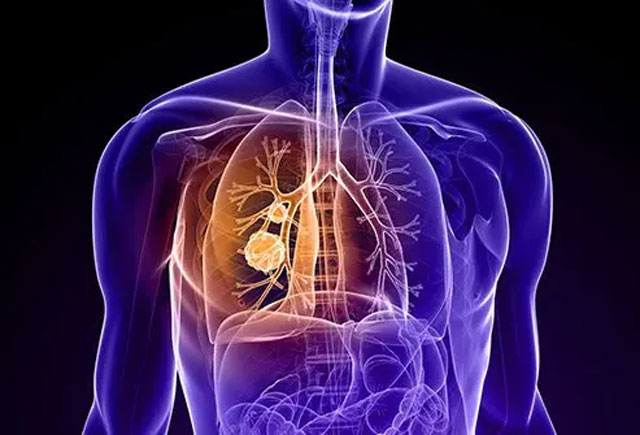
Prevention, therefore, is less about finding a miracle food or supplement and more about reducing repeated harmful exposures that can damage lung cells over time.
Dr Anil Kamath, Senior Consultant Surgical Oncology, Apollo Hospitals Bannerghatta Road, Bengaluru, said, “In my years seeing patients, few moments carry as much weight as delivering a diagnosis of lung cancer. Almost every time, the conversation turns to one heavy question: ‘Could I have done something to stop this?’”
While there may not always be a clear explanation after cancer develops, several practical steps before diagnosis can help reduce risk.
Quitting tobacco remains the biggest step
There is no meaningful discussion about lung cancer prevention without addressing tobacco. Cigarettes are the strongest established risk factor, while cigars, pipes and other smoked tobacco products also expose the lungs to cancer-causing substances.
The Indian government's National Tobacco Control Programme identifies tobacco as a major risk factor for cancer and chronic lung disease and notes that lung cancer risk falls substantially after quitting.
Importantly, quitting helps even after years of smoking.
The body begins to respond once tobacco exposure stops, and the risk of lung cancer continues to decline with time. Cutting down may be better than continuing to smoke heavily, but complete cessation remains the most effective step.
People struggling to quit do not have to rely on willpower alone. Counselling, behavioural support and appropriate medicines can improve the chances of successfully giving up tobacco.
Secondhand smoke also deserves attention. Keeping homes and cars smoke-free can protect family members who do not smoke.
Vaping is not risk-free
Vaping is sometimes discussed as though every alternative to cigarettes is automatically harmless. The evidence does not support that assumption.
E-cigarette aerosols can contain nicotine, ultrafine particles, flavouring chemicals and other potentially harmful substances. Their long-term health effects are still being studied, so it would be premature to claim that vaping causes lung cancer in exactly the same established way as cigarette smoking.
The safer approach is straightforward: non-smokers should not start vaping, while smokers should aim for complete tobacco cessation rather than treating vaping as a risk-free habit.
The same caution applies to hookah and other forms of smoked tobacco. Changing the method of inhaling tobacco does not eliminate exposure to harmful chemicals.
Dr Kamath said the cumulative exposure received by the lungs over time is an important consideration.
“Reducing your risk isn't about panicking over every detail. It's about making deliberate, practical choices that protect your lungs over time,” he said.
Air at home and workplace matters
Some lung cancer risks are less visible than cigarettes.
Radon, for instance, is a naturally occurring radioactive gas that can accumulate indoors. Long-term exposure increases lung cancer risk, particularly among smokers. Health authorities in the US, including the Environmental Protection Agency and the CDC, recommend testing homes for radon and reducing elevated levels.
Because radon has no colour or smell, exposure cannot be identified simply by looking around a home.
However, the frequently cited description of radon as the “second leading cause of lung cancer” is largely based on US public-health data and should not automatically be applied to every country, including India.
Workplace exposure is another important consideration. Asbestos, silica, diesel exhaust, arsenic and certain other occupational substances are recognised lung cancer risks. The WHO lists occupational exposure to asbestos, silica and diesel exhaust among important risk factors.
For people working in construction, mining, manufacturing, demolition and other dusty or chemical-intensive environments, workplace safety measures are therefore crucial. Respiratory protection should be properly selected and fitted according to the specific hazard. Simply wearing any mask does not guarantee adequate protection.
Cooking smoke can also affect lung health, particularly in homes where exposure is frequent. Improving ventilation and switching to cleaner cooking fuels can help reduce exposure.
Do not try to prevent lung cancer with supplements
Cancer prevention is often reduced online to a list of foods, vitamins and supplements. The scientific evidence is much less dramatic.
A varied diet containing vegetables, fruits, whole grains, pulses and other nutrient-rich foods supports overall health. However, there is insufficient evidence to claim that a particular diet can reliably prevent lung cancer. The National Cancer Institute notes that the effects of diet and physical activity on lung cancer prevention remain unclear.
There is also an important warning regarding supplements.
High-dose beta-carotene supplements have been linked to an increased risk of lung cancer among heavy smokers. Large clinical trials found that pharmacological doses of beta-carotene increased lung cancer incidence and mortality in high-intensity smokers.
A nutritious, colourful diet is therefore a sensible choice, but high-dose antioxidant supplements should not be considered a substitute for healthy habits or tobacco cessation.
Alcohol requires a similarly nuanced approach. Alcohol is an established risk factor for several cancers, including cancers of the mouth, throat, oesophagus, liver, breast and colorectum. It is not accurate to describe reducing alcohol consumption as a specific, proven method of preventing lung cancer. However, reducing alcohol intake lowers overall cancer risk, and avoiding heavy drinking remains part of a broader cancer-prevention strategy.
Stay active and understand your risk
Regular physical activity benefits heart health, metabolic health, weight management and overall fitness. Some observational studies have also associated greater physical activity with a lower risk of lung cancer, although the evidence is not strong enough to say that exercise alone prevents the disease.
Walking, cycling, swimming and other forms of regular activity can help maintain fitness and improve the body's ability to cope with illness and treatment.
The focus should be overall health rather than treating exercise as a guarantee against cancer.
Who should consider lung cancer screening?
Another important question is whether a person needs lung cancer screening.
Not everyone does.
For people at sufficiently high risk, annual low-dose CT (LDCT) screening can help detect lung cancer at an earlier stage. The US Preventive Services Task Force recommends annual LDCT screening for adults aged 50 to 80 who have at least a 20 pack-year smoking history and currently smoke or quit within the previous 15 years.
Screening should be stopped once a person has not smoked for 15 years, develops a health problem that substantially limits life expectancy, or becomes unable or unwilling to undergo curative treatment.
A pack-year refers to smoking an average of one pack of cigarettes per day for one year. Thus, 20 pack-years could mean one pack a day for 20 years or two packs a day for 10 years.
These criteria are not universal instructions for every smoker or non-smoker. Screening recommendations can differ between countries and healthcare systems. A doctor should consider age, smoking history and other risk factors, along with the potential benefits and harms, before recommending screening.
Importantly, a screening scan is not the same as prevention.
Small choices can reduce risk
There is no single action that can guarantee protection from lung cancer. But quitting tobacco, avoiding secondhand smoke, reducing exposure to occupational hazards and indoor air pollution, using safer cooking fuels, maintaining overall health and discussing screening when appropriate can all contribute to lowering risk.
Prevention is not about living in fear of every possible exposure. It is about making practical choices that reduce avoidable risks over time.
Medical expert consulted:
Dr Anil Kamath, Senior Consultant Surgical Oncology, Apollo Hospitals Bannerghatta Road, Bengaluru.
His inputs were used to explain practical measures that can help lower lung cancer risk, including tobacco cessation, limiting harmful exposures and making informed decisions about screening and long-term lung health.