Daijiworld Media Network – New Delhi
New Delhi, Sep 29: Routine eye examinations may reveal more than vision problems, as changes in the tiny blood vessels at the back of the eye can sometimes provide early clues about conditions affecting the heart and blood vessels, doctors say.
Although an eye examination cannot diagnose heart disease on its own, changes in the retina may indicate underlying vascular problems, particularly high blood pressure and diabetes.
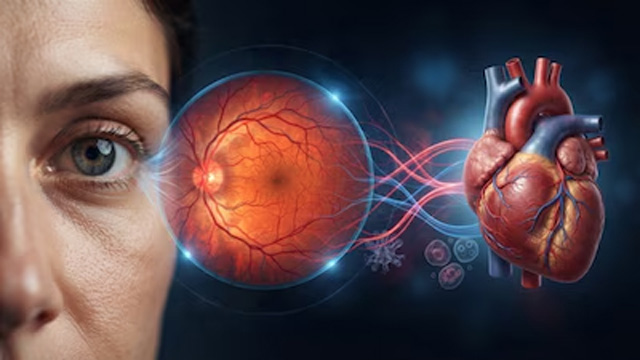
The retina contains a network of tiny blood vessels that can be examined directly. Conditions such as hypertension and diabetes can damage these vessels over time, sometimes causing visible changes before a person experiences other symptoms.
"Your eyes can provide valuable clues about your health condition," said Dr Mazhar Nazim Khan, Senior Consultant at Sharp Sight Eye Hospitals.
He explained that the retina's extensive blood supply reflects the body's broader vascular system and that signs of high blood pressure or diabetes may sometimes become visible in the eyes before symptoms appear elsewhere.
Research discussed by Harvard Health Publishing has also highlighted the connection between retinal blood vessel damage and conditions such as high blood pressure, diabetes and cholesterol build-up, which can affect the arteries supplying the heart.
Blurred or distorted vision is common and may result from several eye conditions. However, sudden or unexplained changes in vision should not be ignored, as they may sometimes indicate problems with blood flow to the retina, Dr Khan said.
A sudden increase in floaters, dark spots or flashes of light also warrants attention. While occasional floaters are common, particularly with age, a sudden shower of floaters accompanied by flashes or a curtain-like shadow across the vision may indicate a retinal tear or detachment and requires urgent medical assessment.
Retinal haemorrhages, or small areas of bleeding in the retina, may also be detected during a dilated eye examination. These can occur due to several conditions, including diabetes and significantly elevated blood pressure, and may prompt further evaluation of a person's vascular health.
Narrowing of retinal blood vessels is another potential indicator of prolonged high blood pressure. Such changes generally require a detailed examination of the retina and may suggest that blood pressure has remained elevated for some time.
Research has also explored the use of artificial intelligence to analyse retinal photographs for patterns associated with cardiovascular risk. Studies published in Nature Biomedical Engineering have examined how retinal images may help estimate cardiovascular risk, although such technology is not a substitute for established medical assessments.
Sudden loss of vision in one eye can occur when blood flow to the retina or optic nerve is interrupted. Such episodes may be associated with vascular conditions and require urgent medical attention.
Doctors caution that retinal changes do not necessarily mean a person has heart disease. Blurred vision, floaters, retinal haemorrhages and changes in blood vessels can have multiple causes.
"If an ophthalmologist identifies concerning retinal changes, it may be appropriate to check blood pressure, blood sugar and cholesterol as well," Dr Khan said.
Regular eye examinations, along with appropriate cardiovascular health checks, can help identify potential health concerns and support timely medical intervention.