Daijiworld Media Network – Cairo
Cairo, Jul 19: In the narrow lanes of Cairo's Garbage City, plastic recyclers are witnessing an unexpected surge in business as disruption to shipping through the Strait of Hormuz has driven manufacturers to seek locally recycled raw materials.
The increase in demand follows supply disruptions caused by the conflict involving Iran and the United States, which affected one of the world's busiest shipping routes for raw materials used in plastic production.
Among those benefiting is 25-year-old recycling specialist Peter Romany, who works in Manshiyet Nasser, an eastern Cairo settlement known for its extensive informal recycling network.
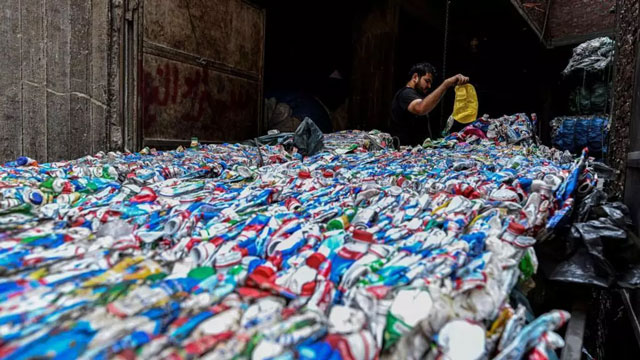
"Before the war, we were the ones calling factories, trying to sell our material," Romany said. "But after the war broke out, the factories started calling us. They'd ask: How much do you have? Can you deliver today? That never used to happen."
Home to more than 115,000 people, the predominantly Coptic Christian neighbourhood beneath the Mokattam Hills processes more than one-third of Cairo's waste, according to official figures. Families live and work in the same buildings, with waste sorting and recycling taking place on the lower floors while homes occupy the upper levels.
Romany specialises in recycled polyethylene, one of the world's most widely used plastics, particularly in packaging.
According to industry data, around 85 per cent of the Middle East's polyethylene exports pass through the Strait of Hormuz. Egypt imports nearly 40 per cent of its raw plastic materials, mainly from Gulf countries, Europe, China and South Korea.
With imported supplies disrupted, packaging and plastic prices have more than doubled for some products, prompting manufacturers to turn to domestic recycled materials.
Rizq Yousif, who recycles PET plastic commonly used in food and beverage packaging, said factories that once delayed payments were now paying in advance to secure supplies.
He said demand for recycled PET had tripled, while prices for some recycled plastics had increased by up to 60 per cent.
The rise in demand has benefited businesses across the recycling sector. Fayrouz El-Sayed, Chief Executive Officer of Sadat City Chemical Fiber Factory, which produces polyester fibres from used plastic bottles, said the company had expanded into new export markets, including Brazil, during the latest disruption.
Nesma El-Areef, Senior Marketing and Sales Manager at Uflex Egypt, said demand for the company's recycled packaging materials had risen by up to 40 per cent.
"We saw a significant increase in orders, particularly from food and beverage manufacturers, because we offered a more readily available alternative to imported materials," she said.
Industry leaders, however, believe the surge may not be permanent. Yousif said demand and prices had begun to soften after reports emerged last month that negotiations between the United States and Iran were making progress.
However, renewed tensions in the region and fresh disruptions to shipping have once again increased demand for recycled plastic.
"We're used to it by now," Yousif said. "Whenever there's trouble there, the customers start calling us."