Daijiworld Media Network - New Delhi
New Delhi, Jul 18: The Union Ministry of Health and Family Welfare has adopted a Key Performance Indicator (KPI) framework to strengthen disease surveillance and public health programmes across the country following a two-day National Review Meeting held in New Delhi from July 16 to 17.
The meeting brought together senior health officials from all 36 states and Union Territories to review the implementation of key public health programmes, assess progress in disease surveillance and discuss strategies to improve data-driven governance.
The meeting was inaugurated by Additional Secretary (Public Health) Dr Rakesh Gupta in the presence of Director General of Health Services (DGHS) Dr Loveneesh G Krishna, Director (Public Health) Sukhlal Meena, Additional Director of the National Centre for Disease Control (NCDC) Dr Arti Bahl and representatives of key development partner organisations.
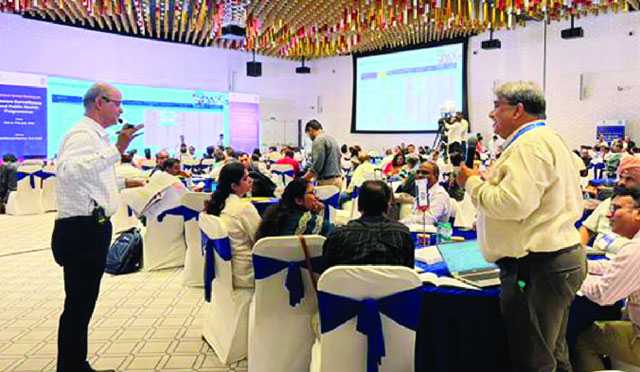
During the deliberations, officials reviewed the progress of several national public health initiatives, including the National One Health Programme for Prevention and Control of Zoonoses, National Rabies Control Programme, Programme for Prevention and Control of Leptospirosis, National Programme for Prevention and Control of Snakebite Envenoming, Disaster Management, Integrated Disease Surveillance Programme (IDSP), Pandemic Preparedness, Field Epidemiology Training Programme (FETP), Antimicrobial Resistance (AMR), National Programme on Climate Change and Human Health, and the National Bio-Monitoring Programme for Chemical Toxicants.
A key outcome of the meeting was the unanimous adoption of the KPI framework by all 36 states and Union Territories, with a commitment to achieving defined targets and performance benchmarks to strengthen the implementation, monitoring and evaluation of public health programmes.
The Centre and the states and Union Territories also agreed to conduct monthly performance reviews to assess progress against the KPIs, identify implementation gaps and facilitate timely corrective action.
Based on findings from supportive supervision carried out by SPOT members, the states and Union Territories also committed to addressing critical operational bottlenecks and improving the delivery of disease surveillance and other public health programmes, the ministry said.